On the morning of October 11th, 2025, a delegation jointly organized by the Shanghai Institute of International Studies and the Hopkins-Nanjing Center participated in a series of activities focused on "Exploring Perspectives on US-China Relations", organized as part of the Shanghai-Nanjing Plus 2025 Tour. The delegation attended a roundtable discussion on “Technology Innovation on the Shifting Economic and Policy Landscape”, organized by the Shanghai Institute of International Studies (SIIS).
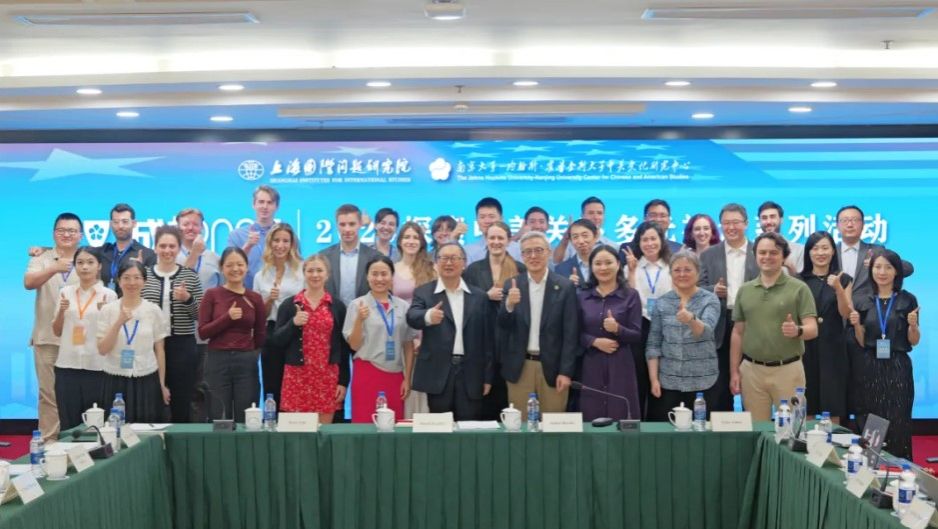
Conference Photo
Chen Dongxiao, President of the Shanghai Institutes for International Studies (SIIS), attended the meeting and delivered remarks, and Yang Jiemian, Chairman of the institute’s Academic Affairs Committee, gave the keynote address. The meeting was moderated by Feng Shuai, Deputy Director of the Institute for International Strategy and Security Studies. Guests were also invited from the Hopkins–Nanjing Center, the Center for American Studies at Fudan University, and the United Nations Industrial Development Organization’s Global Alliance on Industrial AI, among others. The Shanghai Nanjing Plus 2025 delegation, along with the speakers and the guests, engaged in lively discussions on Chinese and American youths’ understanding of innovation-driven development, and the potential for China–U.S. cooperation in science and technology innovation.
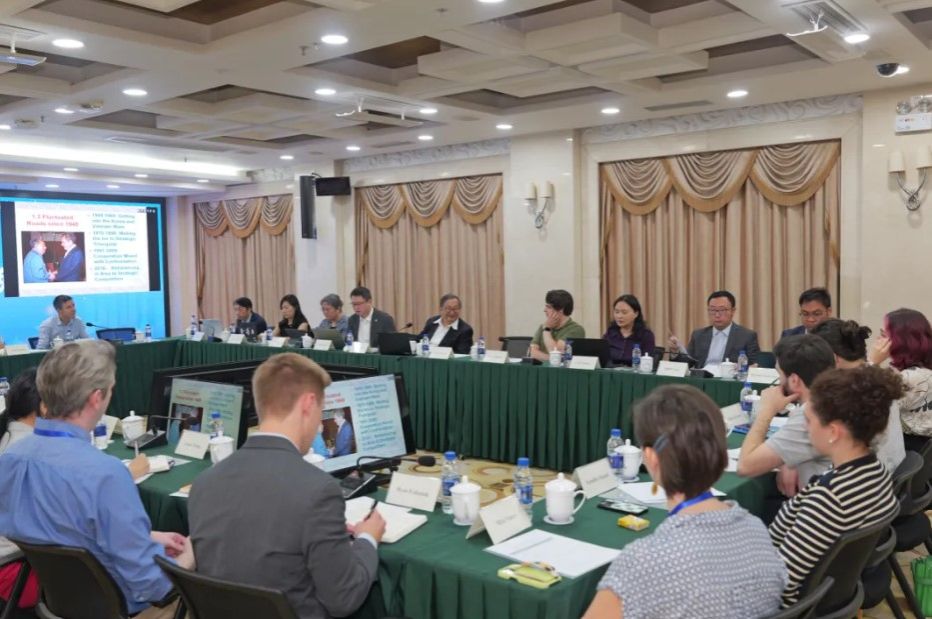
Event Venue
Before the meeting officially began, President Chen Dongxiao met briefly with the participants of the Shanghai Nanjing Plus 2025, listening closely to their impressions of the event. In his subsequent remarks, he first outlined the development of the Shanghai Institutes for International Studies (SIIS). He noted that over the 65 years since its founding in 1960, SIIS has provided intellectual support for the formulation of China’s foreign policy and responses to international affairs, while consistently placing high importance on academic exchange and cooperation with partners around the world. SIIS’s mission, he said, is to build on its multiple roles as both a think tank and a “do tank” by further strengthening its convening function—in fact, some members of the Shanghai Nanjing Plus 2025 delegation come from U.S. think tanks and institutions that have long maintained partnerships with SIIS. Over the years, SIIS has worked closely with these partners, and their joint research has covered many key areas in China–U.S. relations, including global strategic stability, international order, the Taiwan issue, and reforms to the global governance system in finance, trade, and sustainable development. He also pointed out the need to focus on how technological development affects U.S.- China relations. He emphasized that current advances—especially breakthroughs in artificial intelligence, digital technologies, and other emerging disruptive fields—are having profound, complex, and lasting impacts on the structure, nature, and trajectory of the relationship. Finally, he expressed the hope that in this era centered on “competition and governance,” the discussion would be enlightening, in-depth, and constructive, helping all sides to jointly explore effective pathways for China and the United States to achieve peaceful coexistence and win–win cooperation.
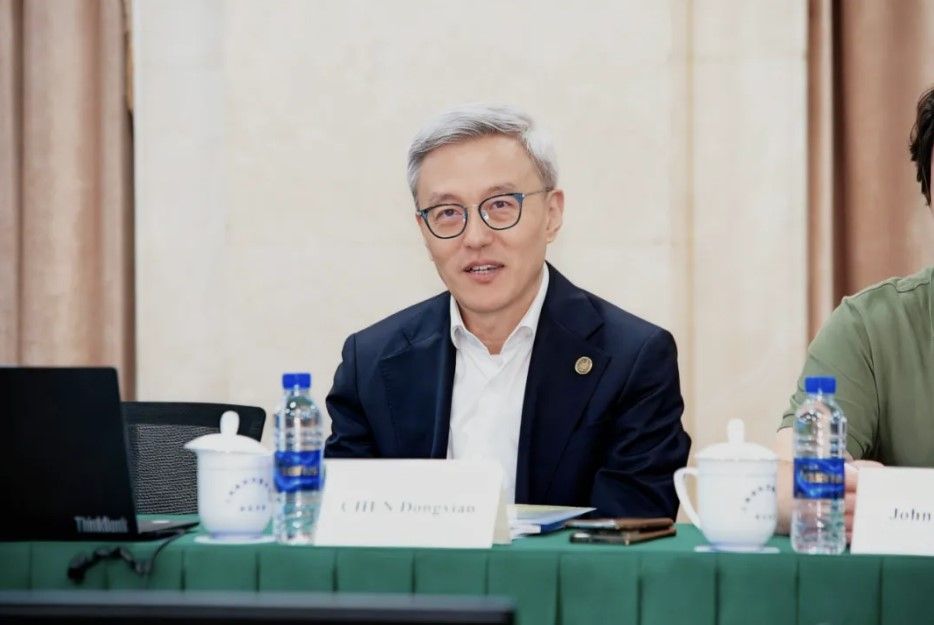
Chen Dongxiao, President of the Shanghai Institutes for International Studies (SIIS), delivering his remarks
After President Chen’s remarks, Chairman Yang Jiemian delivered a keynote speech titled “From the Baby Boomers to Gen Z: Professional Preparation and Career Development in the Context of the Trajectory of U.S.-China Relations,” which was structured around three themes. Chairman Yang began by providing a systematic review of the evolution of U.S.-China relations, beginning with the Empress of China, the American merchant ship that first undertook direct trade with China in 1784, then recounted how the two countries joined forces against fascism during World War II, and finally outlined the fluctuations in bilateral ties after 1949, tracing the two nations’ history of engagement. He then went on to share his experiences studying in the United States and practicing American studies. Recalling an experience from his time in the United States in the 1980s, Chairman Yang shared a story about his cross-country journey from Massachusetts, through Michigan, to Montana, travelling on a Greyhound bus. He asked the Shanghai Nanjing Plus 2025 delegation whether they had ever ridden a Greyhound bus, which prompted laughter from the delegation, who resonated with his experiences. Finally, he offered an outlook on future development and career planning, arguing that in today’s rapidly changing era one must proactively adapt to transformational trends. When speaking on career development, Chairman Yang cited maxims from Rousseau, Einstein, Lu Xun, and other eminent figures from China and abroad, as well as drawing on his own insights from decades of experience researching and practicing in the field.
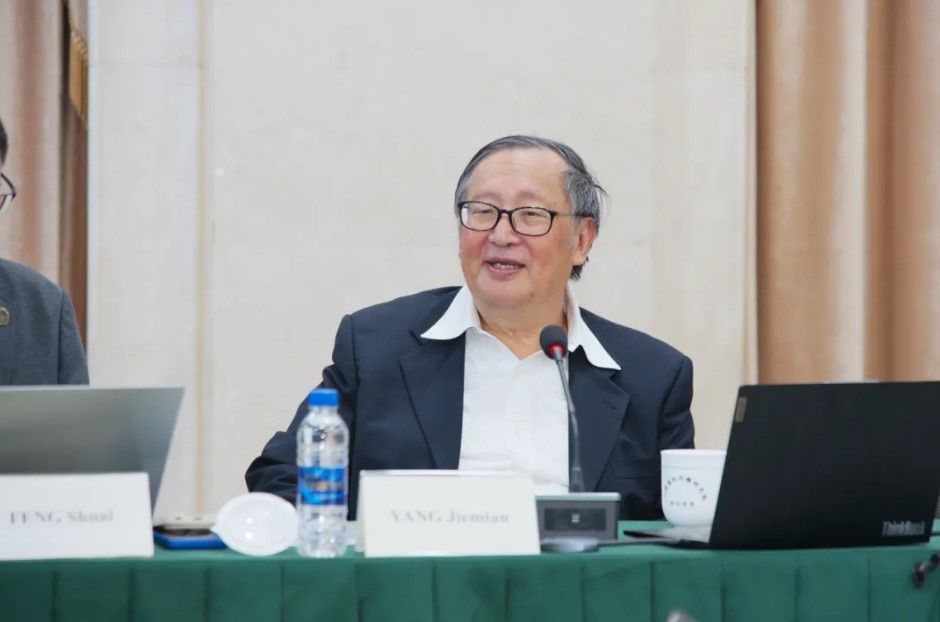
Yang Jiemian, Chairman of the Academic Affairs Committee at the Shanghai Institutes for International Studies, delivering his keynote speech
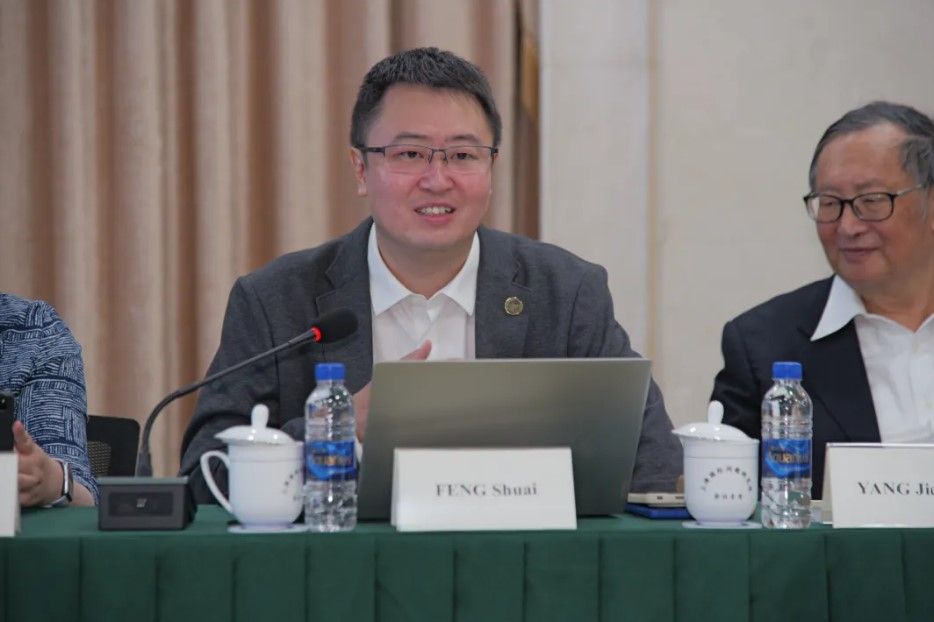
Feng Shuai, Deputy Director of the Institute for International Strategy and Security Studies at the Shanghai Institutes for International Studies, moderating the panel
After the keynote speech, members of the Shanghai Nanjing Plus 2025 delegation expressed their thanks to Chairman Yang and asked questions on topics such as U.S.-China relations, international educational exchanges and cooperation, climate change, and artificial intelligence. The discussion was very lively, showcasing the delegation’s deep engagement with, and enthusiasm for, exploring U.S.-China issues.
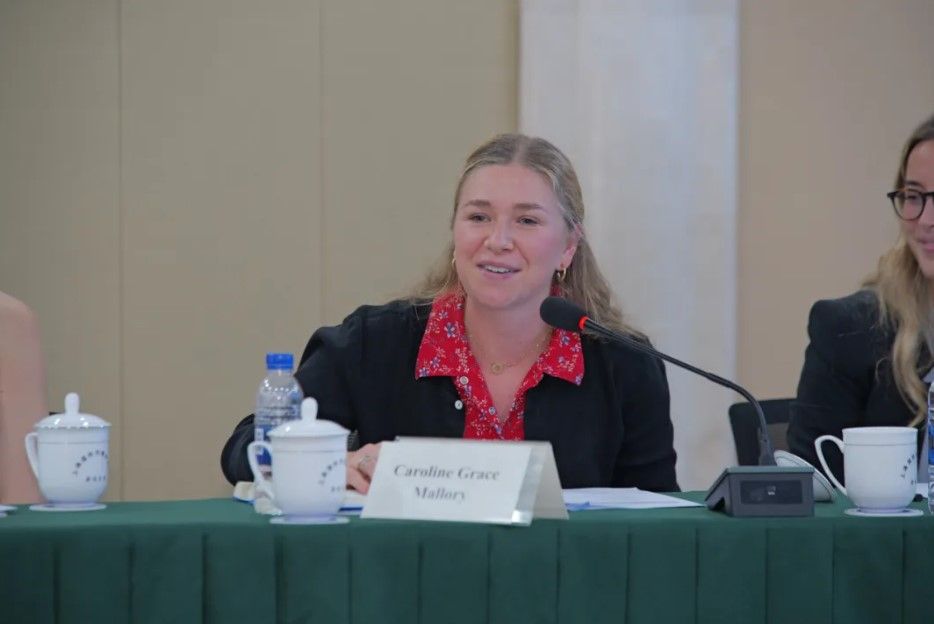
Opening Session
After the opening session concluded, experts including Professor Cai Cuihong of Fudan University’s Center for American Studies; Wu Cunsi, Director of the Center for American Studies at the Shanghai Institutes for International Studies; Xu Chun, Secretary-General of the UN Industrial Development Organization’s Global Alliance on Industrial AI Center of Excellence; Zhou Yiqi, Associate Research Fellow at SIIS’s Institute for Public Policy and Innovation Research; and Xue Lei, Assistant Research Fellow at SIIS’s Institute for World Economy Studies, shared their views on the theme of “the economic and political impacts of technological innovation and its role in U.S-China relations.” Drawing on their respective fields, the experts examined the topic from different perspectives and offered multidimensional and specialized insights.
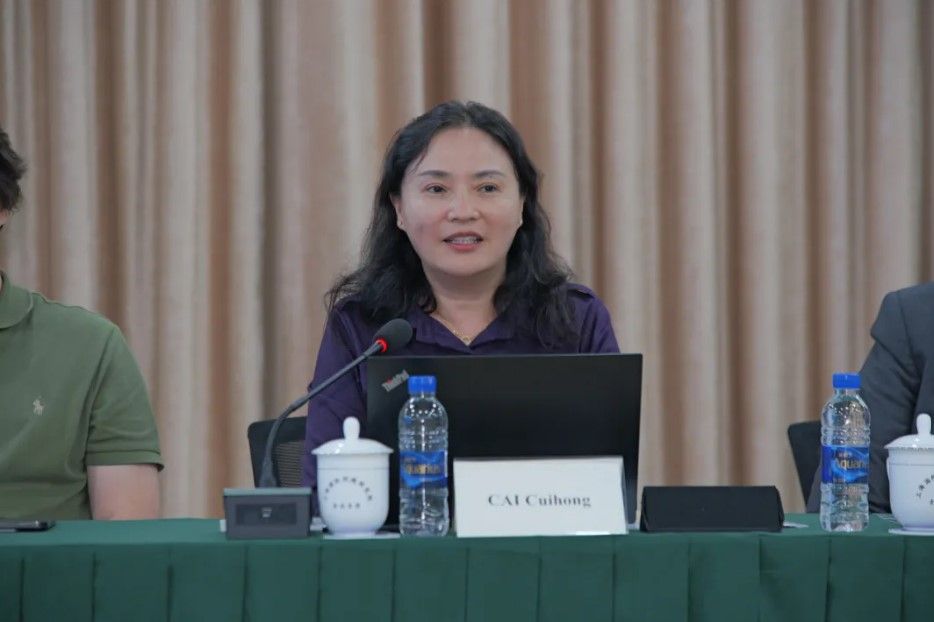
Professor Cai Cuihong from the Center for American Studies at Fudan University delivering her remarks
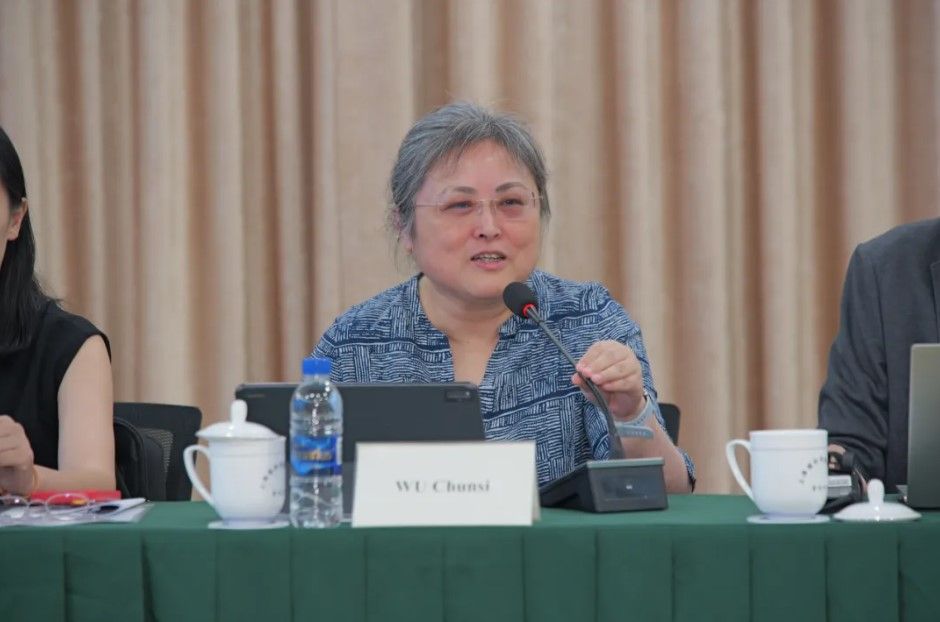
Wu Chunxi, Research Fellow at the Institute for International Strategy and Security Studies and the Shanghai Institute for International Studies, delivering her remarks
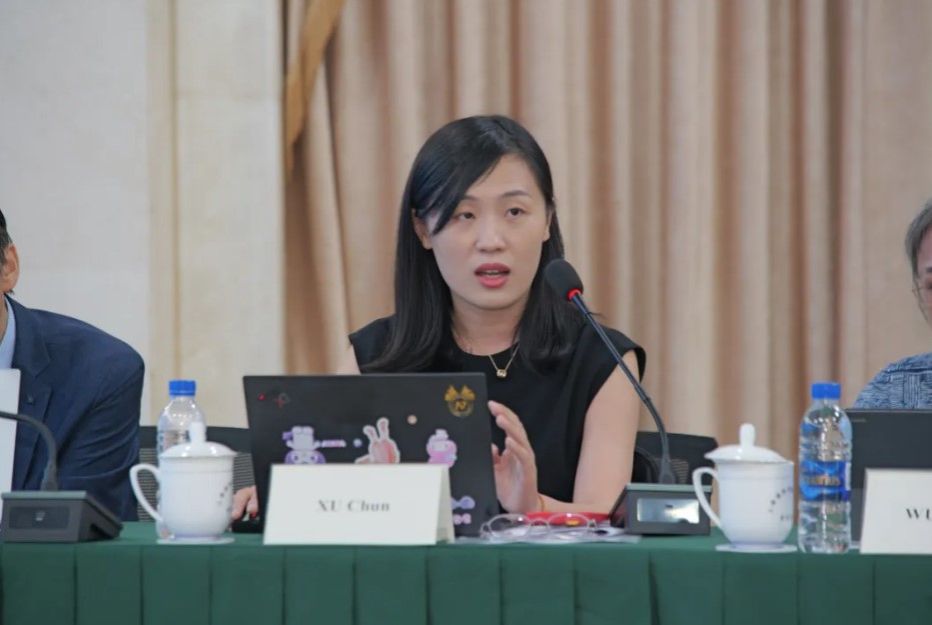
Xu Chun, Secretary-General of the Center of Excellence of the United Nations Industrial Development Organization’s Global Alliance on Industrial Artificial Intelligence, delivering her remarks
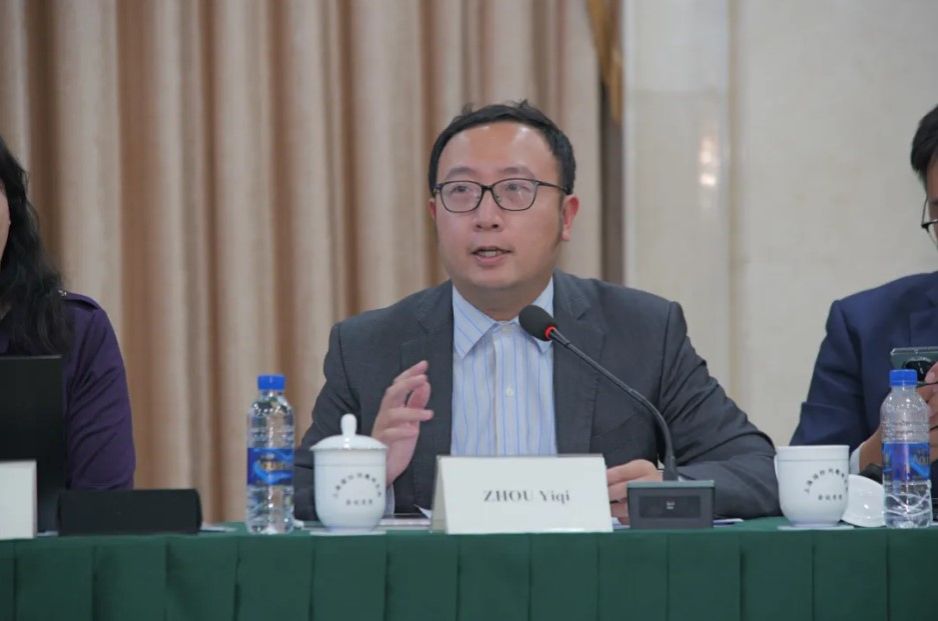
Zhou Yiqi, Associate Research Fellow at the Institute for Public Policy and Innovation at the Shanghai Institutes for International Studies, delivering his remarks
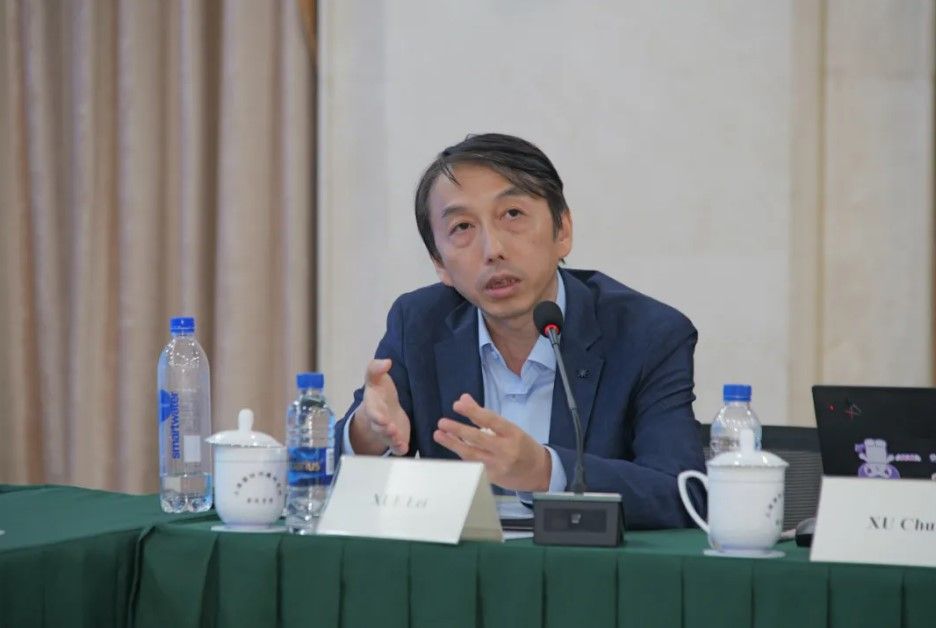
Xue Lei, Assistant Research Fellow at the Institute for World Economy Studies, Shanghai Institutes for International Studies, delivering his remarks
After the experts’ remarks, members of the Shanghai Nanjing Plus 2025 delegation engaged in an interactive Q&A with the five experts on topics including U.S.-China relations, China–U.S.–Europe trilateral interactions, semiconductor industry development, AI governance, and climate change responses, further deepening their understanding and communication on these issues.
The roundtable concluded after a lively and in-depth discussion. Members of the Shanghai Nanjing Plus 2025 delegation found the exchange highly fruitful and expressed their heartfelt thanks to the Shanghai Institutes for International Studies for its role in facilitating the event.


