On the morning of May 16, 2026, the opening ceremony for the Ding Jie Art Exhibition was held at the Johns Hopkins University-Nanjing University Center for Chinese and American Studies (HNC). As one of the events celebrating the Center’s 40th anniversary, this exhibition showcases recent cross-disciplinary explorations in painting by the renowned writer and crossover artist Mr. Ding Jie. The event was jointly hosted by the Hopkins-Nanjing Center and the Nanjing University School of Arts.
Distinguished guests attending the event included Si Jinquan—former Director of the Foreign Affairs Committee of the Provincial People's Congress, former Deputy Director of the Provincial Party Committee's Publicity Department, and Vice President of the Jiangsu Association for the Promotion of International Friendly Exchanges; Zhang Feng—former Member of the Standing Committee of the Nanjing Municipal Party Committee and essayist; Zhang Chaoyang—Secretary of the Party Committee and Chairman of the Phoenix Publishing & Media Group; Guan Xiangqun—former Secretary of the Party Committee at the Nanjing University of the Arts and President of the Jiangsu Zhang Jian Research Society; and Feng Xiaoting—Editor-in-Chief of Sina Jiangsu, among other provincial and municipal dignitaries. They were joined by Nanjing University leaders and members of the School of Arts—including Zou Yajun (former Vice President of Nanjing University), Huang Houming (Vice Dean of the School of Arts), and Shang Rong (Vice Dean of the School of Arts and Vice Chairman of the Jiangsu Artists Association)—as well as representatives from various media outlets, such as Xinhua News Agency, The Yangtze Evening Post, Nanjing Daily, and Youth Magazine.
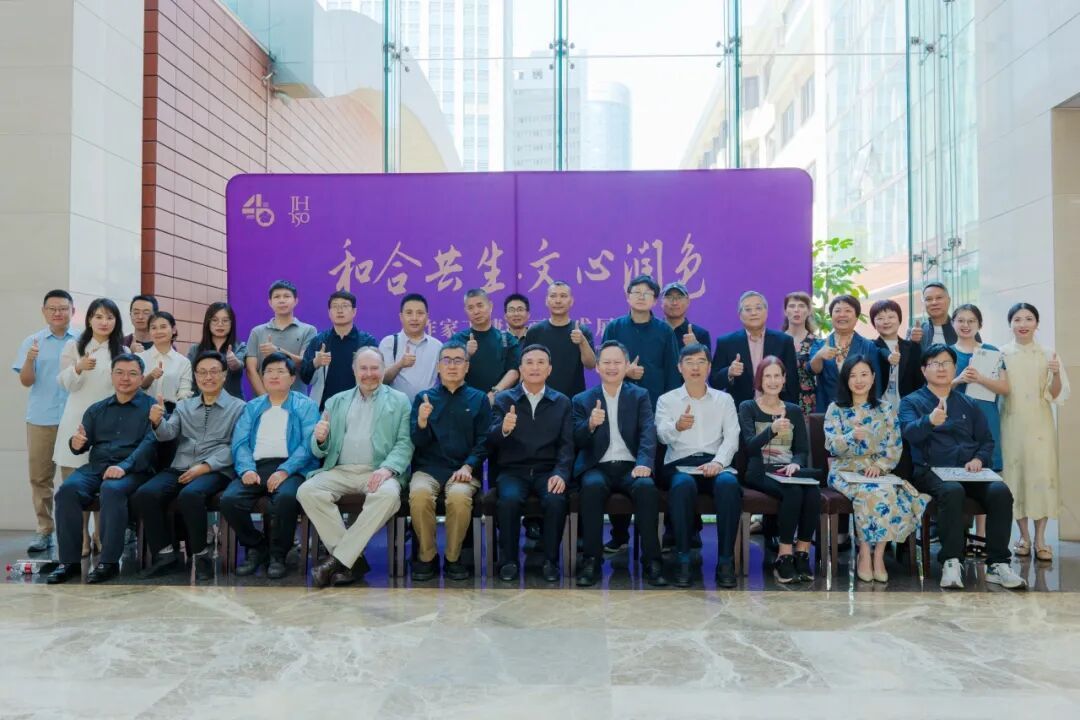
Group Photo of Guests
During the opening ceremony, HNC Co-Directors Li Xiaorong and Adam K. Webb—American Co-Director delivered welcoming remarks as the hosts of the event. In her speech, Li Xiaorong shared the inspiration behind curating this exhibition. She recalled that upon first admiring the fish depicted in Ding Jie’s paintings, she was immediately reminded of the koi swimming in the HNC’s own courtyard fish pond. She noted that the vibrant and uninhibited brushwork conveys a deep yearning for freedom and a profound exploration of life, evoking a strong sense of resonance in the viewer. She encapsulated this artistic appeal—which transcends both artistic mediums and national borders—with the phrase: "Water knows no bounds; fish swim East and West. Art speaks no words; hearts connect China and the World." Co-Director Li further remarked that, as a crossover artist, Ding Jie’s literary and artistic creations mutually nourish and complement one another, serving as a natural outpouring of his inner world and spiritual temperament. Co-Director Li emphasized the profound humanistic significance of hosting the Ding Jie Art Exhibition on the 40th anniversary of the HNC. She characterized the event as an artistic resonance of the HNC’s four-decade-long philosophy of cross-cultural education and noted that the successful realization of this exhibition was made possible by a special arts exchange initiative established for Johns Hopkins University’s 150th-anniversary celebrations.
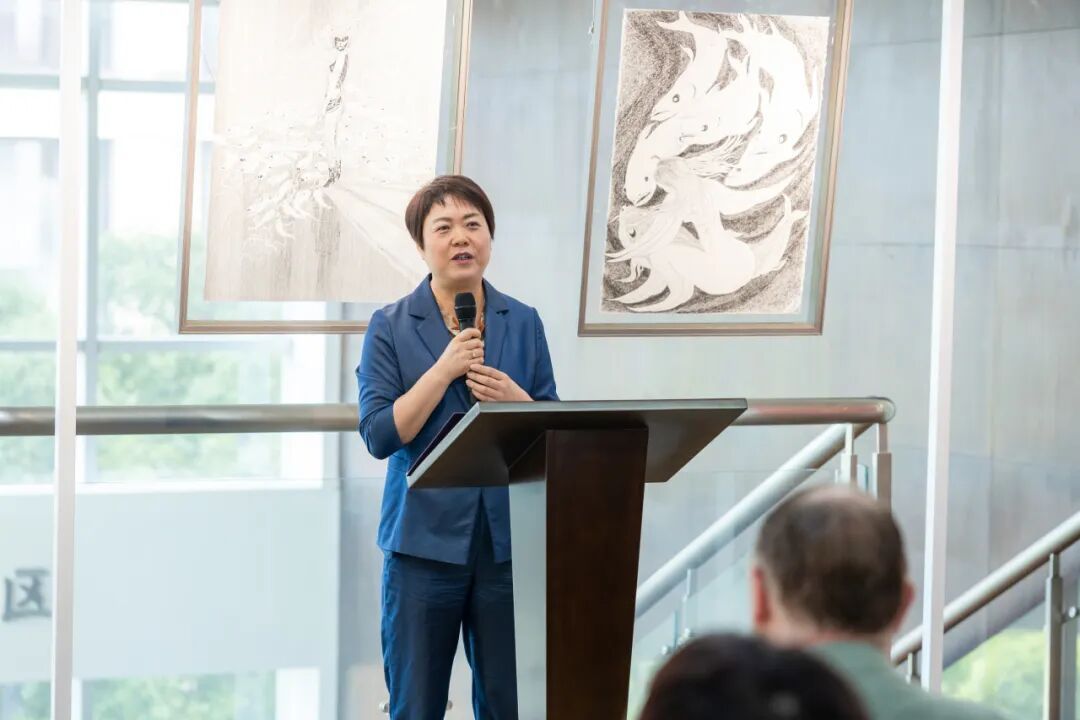
Chinese Co-Director Li Xiaorong
In his remarks, Co-Director Adam Webb expressed that it is truly a rare feat for Ding Jie to have achieved such excellence across multiple distinct fields—including art, literature, and public affairs—and noted that his influence extends across various strata of Chinese society as well as overseas. He shared that the exhibition’s theme—"Harmonious Coexistence: The Literary Spirit in Art"—underwent extensive deliberation during the English translation process; ultimately, however, it proved difficult to convey its profound nuances with absolute precision in English. Consequently, the decision was made to embrace a sense of "negative space"—leaving room for interpretation—thereby allowing guests to personally experience and internalize the theme's deeper meaning through their engagement with the artworks themselves. He candidly acknowledged that while the Hopkins-Nanjing Center has historically focused on fields such as international relations, politics, economics, and law, this interdisciplinary art exhibition serves to enrich the experiences of the HNC’s students and faculty from the distinct perspectives of the humanities and the arts. He emphasized that, having weathered forty years of challenges and triumphs, the Center continues to bring together students from diverse backgrounds, fostering an enduring spirit of inquiry into cross-cultural learning and living. This exhibition, he asserted, stands as a vivid embodiment of that very spirit—serving as yet another testament to the HNC’s unwavering commitment to actively putting its educational philosophy of cross-cultural exchange into practice.
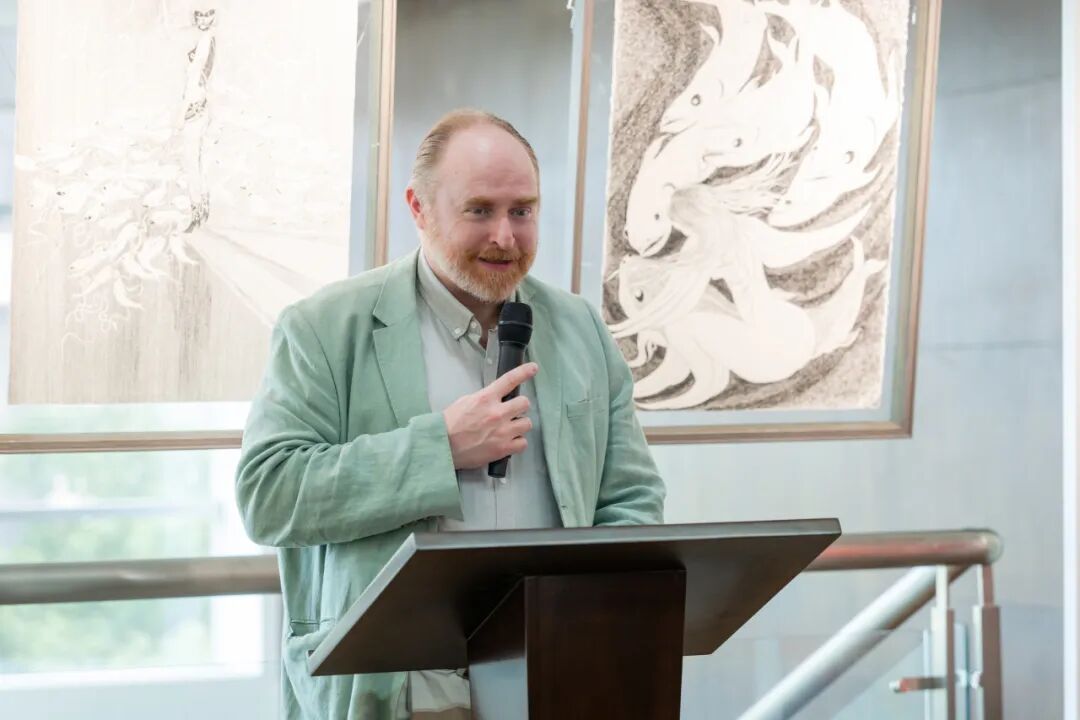
American Co-Director Adam Webb
Zou Yajun delivered an address in which he observed that, as the Hopkins-Nanjing Center approaches its 40th anniversary celebrations, the hosting of the Ding Jie Art Exhibition serves as both a visual feast and a profound interpretation of the humanistic spirit of "Harmonious Coexistence." He emphasized that, as the first Chinese-foreign joint educational institution established in China following the Reform and Opening Up era, the Hopkins-Nanjing Center pioneered the model of international cooperative education. Furthermore, he noted that while the Department of Art at Nanjing University may be modest in scale, it possesses a deep-rooted heritage and has produced a succession of distinguished talents—ranging from Zhang Daqian and Xu Beihong to Wu Weishan. He highlighted that this exhibition marks the first-ever joint collaboration between the Department of Art and the HNC, thereby facilitating artistic exchange within the unique cross-cultural space of the Hopkins-Nanjing Center and holding truly pioneering significance. Finally, he characterized Ding Jie’s artistic practice as a quintessential exemplar of the organic fusion of literary thought with visual expression, and of Eastern Xieyi (freehand) aesthetics with Western compositional principles. He expressed his hope that Ding Jie would bring his literary and artistic works into the campus environment, inspiring a greater number of students, serving as a vital conduit for U.S.-China cultural exchange, and playing an even more significant role in Nanjing University’s aesthetic education initiatives.
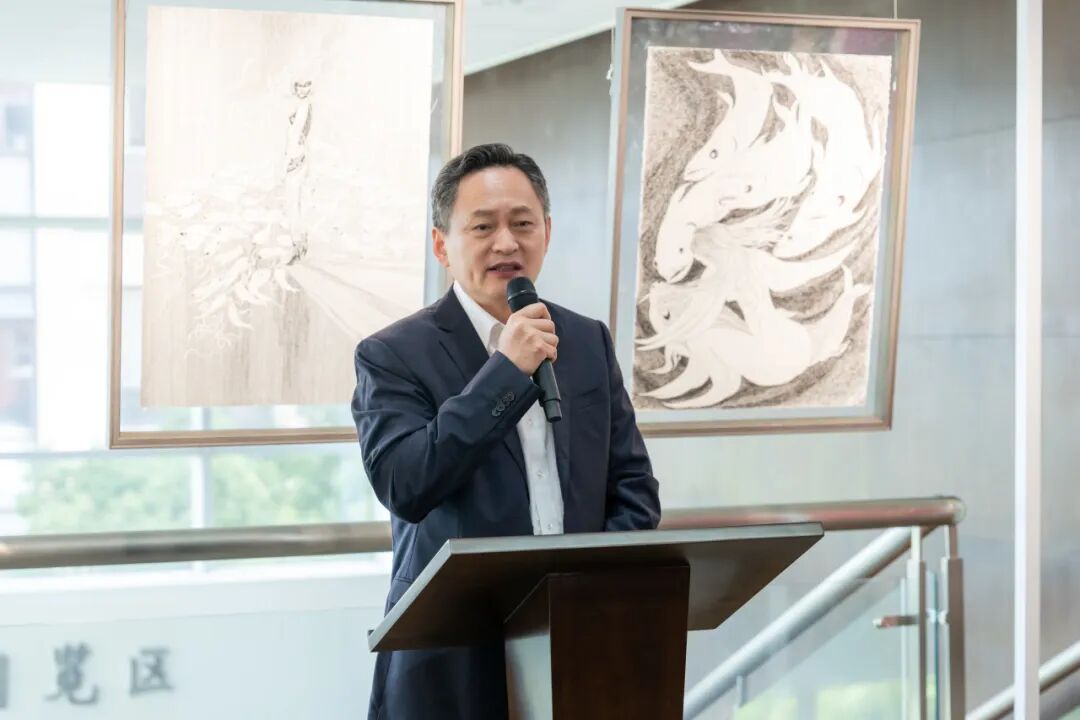
Zou Yajun, Former Vice President of Nanjing University
In his address, Si Jinquan noted that the Hopkins-Nanjing Center, standing as a paragon of U.S.-China cooperation in culture and education, has over the past forty years cultivated a multitude of cross-cultural talents possessing a global perspective, thereby establishing itself as a crucial bridge for people-to-people exchanges between China and the world. By hosting Ding Jie’s art exhibition as part of its 40th anniversary celebrations, the HNC seeks to embody the profound significance of cross-cultural dialogue from the elevated vantage point of humanistic spirit and artistic creativity. He posited that the "interdisciplinary" and "international" nature of Ding Jie’s work serves as a vivid embodiment of the HNC’s own ethos of openness, integration, and innovation. Ding Jie’s Five Continents, One Source series, utilizing the imagery of "fish and water," conveys the concept that "all of humanity shares a single Earth and a shared aspiration for a better world." Ding Jie’s interdisciplinary practice stands as an artistic interpretation of the vision of a "Community with a Shared Future for Humanity"—demonstrating that culture can transcend national borders, and art can touch the human heart directly.
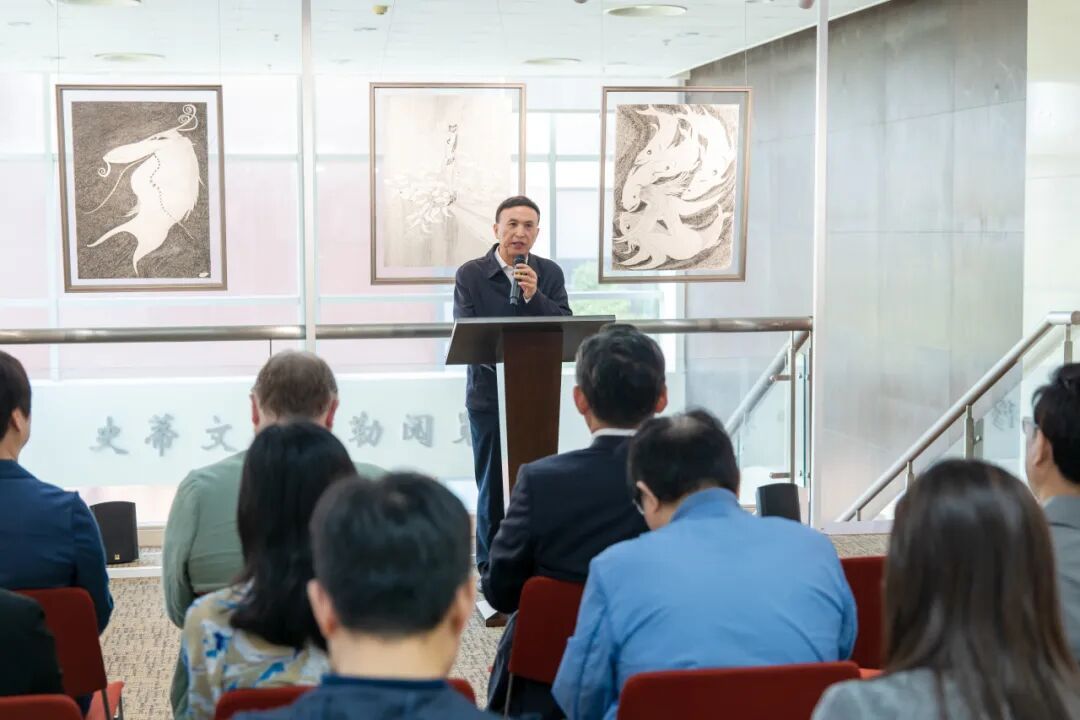
Si Jinquan, Vice President of the Jiangsu Association for the Promotion of International Friendly Exchanges
In expressing his appreciation, Ding Jie remarked on the deep honor that his art exhibition was selected as one of the centerpiece events for the HNC’s 40th anniversary celebrations. He noted that Nanjing University has long been an institution he deeply admired. Throughout his decades-long creative career, he had always harbored a fervent desire to engage with the university in some capacity—a dream that has now finally come true. Citing the ancient maxim, "The ocean embraces all rivers; it is its inclusiveness that makes it vast," he described this philosophy as a reflection of national character as well as the guiding motto of his own creative journey. He explained that his paintings blend the fluidity of traditional ink wash with the structural strength of linear composition, seeking to capture both the "negative space" and distinct character of Eastern Xieyi aesthetics, while simultaneously drawing upon the compositional structures and dynamic tension found in Western modernism. He asserted that Chinese culture has historically championed the principle of "harmony without uniformity." True inclusiveness, he argued, does not entail the erasure of differences, but rather the discovery of shared humanity and aesthetic beauty grounded in a respect for each entity's unique identity. He concluded with a poignant reflection: an individual’s creative output is akin to a trickling stream—only by merging into the vast ocean of inter-civilizational exchange can it flow eternally, never to run dry.
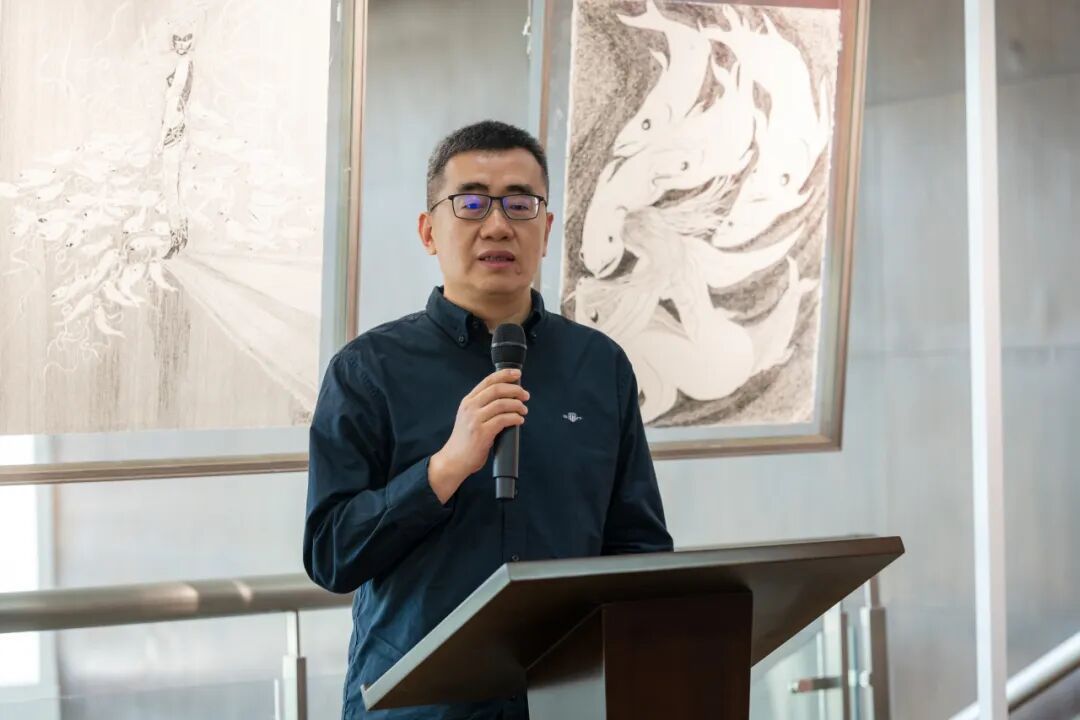
Ding Jie, Writer and Crossover Artist
Following the conclusion of the speeches, Zou Yajun and Ding Jie jointly unveiled the artwork gifted to the HNC. Ding Jie presented his artwork, Great Virtue as Teacher, to the Hopkins-Nanjing Center as a commemorative gift marking the HNC’s 40th anniversary. Subsequently, all guests gathered for a group photograph.
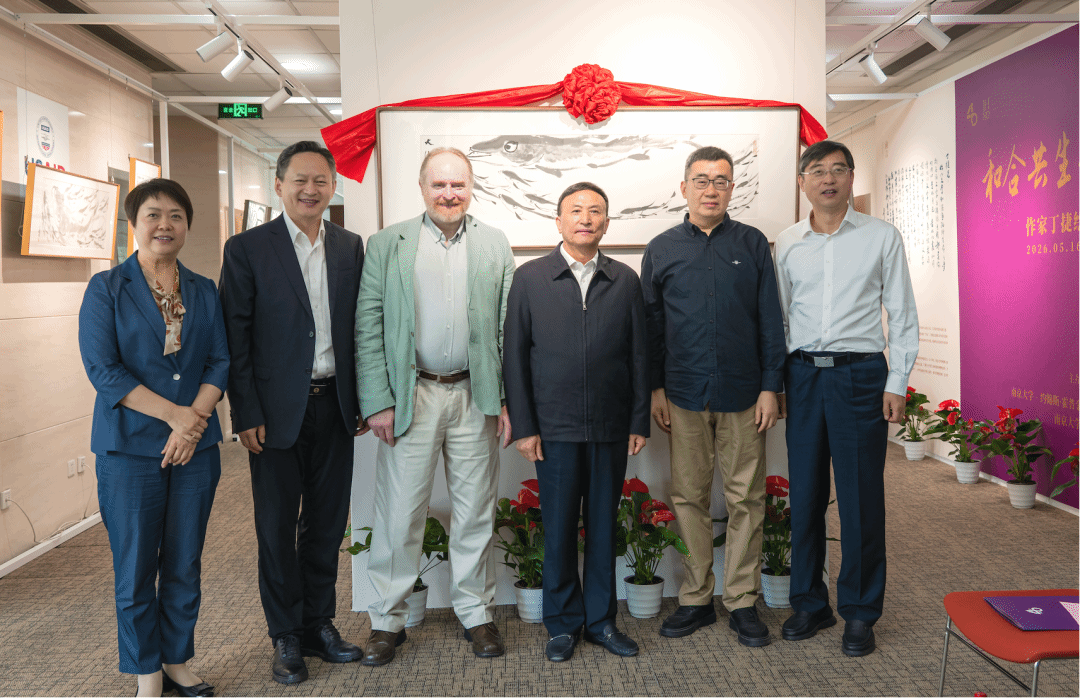
Group Photo at the Unveiling Ceremony
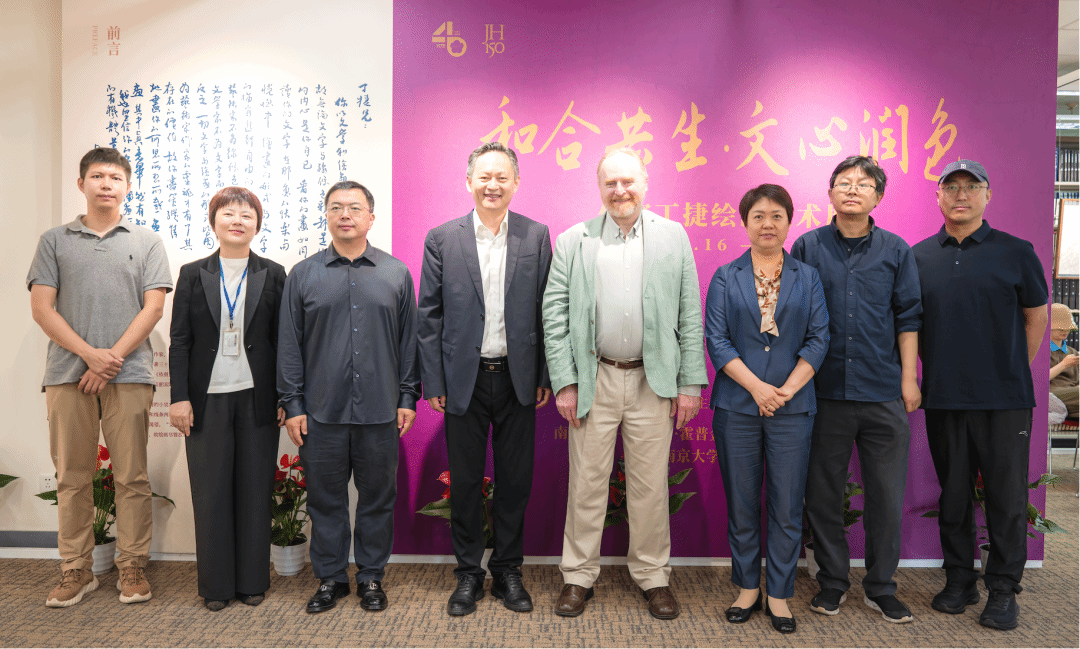
Group Photo of Guests Representing the Organizing Institutions
During the book-signing session, Ding Jie signed and distributed copies of his art collection to the guests and members of the HNC’s faculty and student body in attendance.
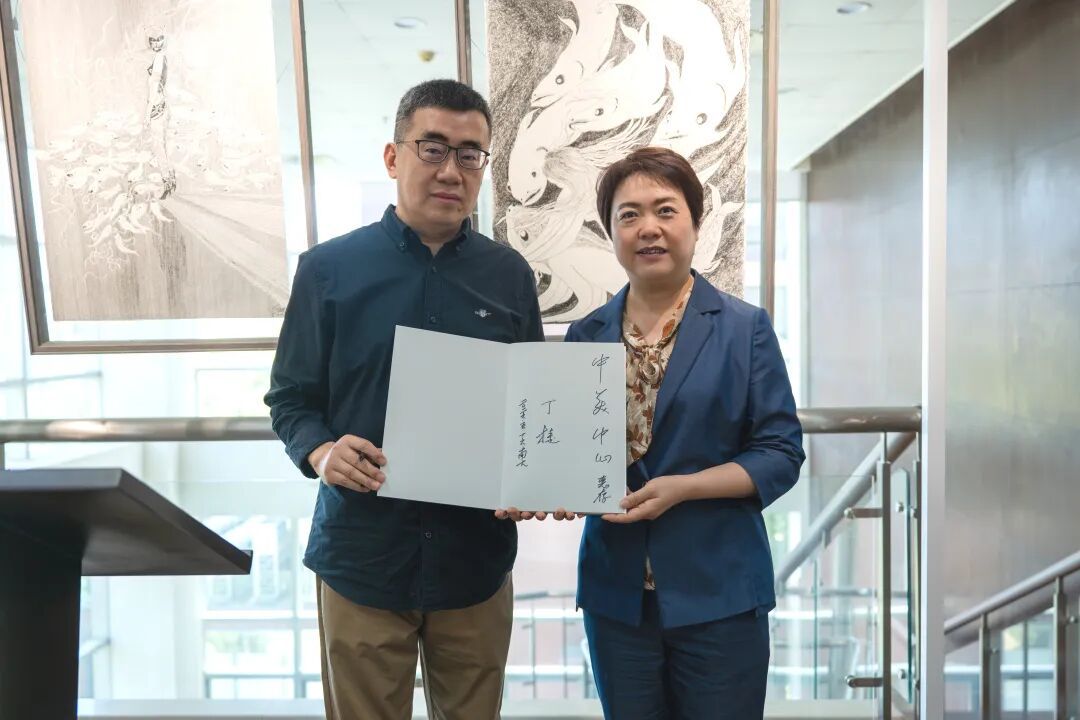
Ding Jie Presents Books to the HNC
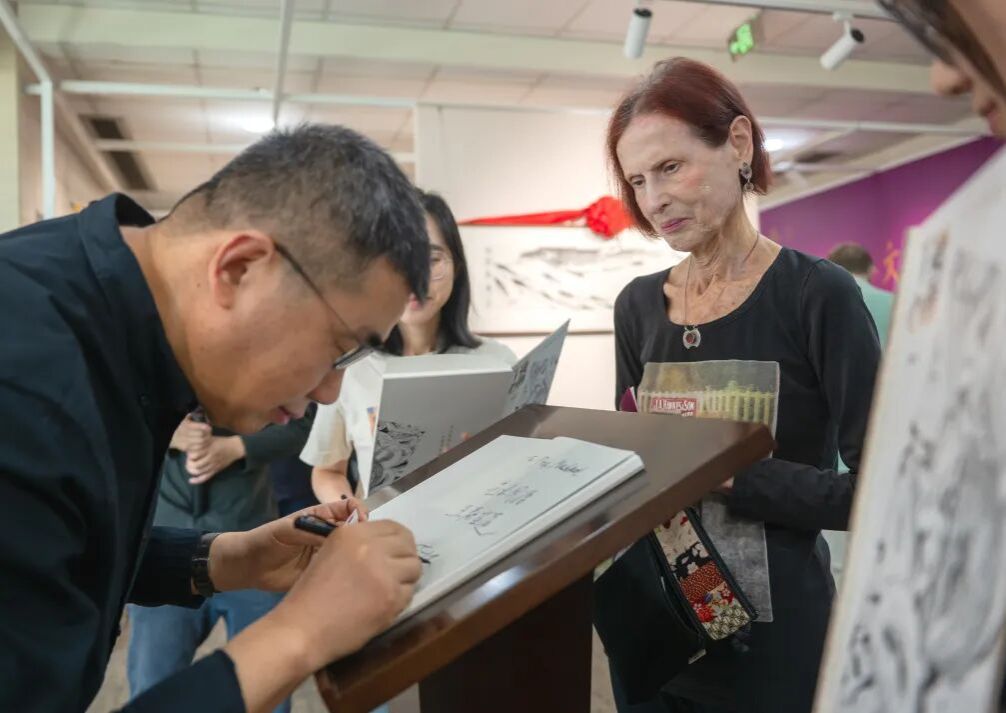
Ding Jie Signs and Distributes Art Albums
The exhibition is hosted on the fourth floor of the Hopkins-Nanjing Center Library and will remain on view until June 22. Faculty, students, alumni, and members of the public interested in the HNC’s development are warmly invited to visit the exhibition.