On November 21st, the results of the 2025 re-election of academicians were officially announced. A total of 144 people were elected, including 73 elected as academicians of the Chinese Academy of Sciences and 71 elected as academicians of the Chinese Academy of Engineering. Among them, Professor Zhou Zhihua, the vice president of Nanjing University and the director of the School of Computer Science and the School of Artificial Intelligence, and Professor Shi Yi from the School of Electronic Science and Engineering were elected as academicians of the Information Technology Division of the Chinese Academy of Sciences, and Professor Chen Yanfeng from the School of Modern Engineering and Applied Sciences was elected as an academian of the Technical Sciences Division of the Chinese Academy of Sciences. In addition, according to incomplete statistics, other Chinese Academy of Sciences academicians who have worked and studied at Nanjing University include Dai Zige and Chen Yanjing; Chinese Academy of Engineering academicians include Lian Yubo, Zhou Jianhua and Zhang Qiang.
Warm congratulations to all the newly elected academicians!
ZHOU Zhihua
Was elected as an academician of the Information Technology Division of the Chinese Academy of Sciences

Zhou Zhihua, male, was born in Guangzhou, Guangdong Province in November 1973. His native place is Yancheng, Jiangsu Province. He is a computer scientist and an expert in artificial intelligence. He is a professor at the School of Computer and Artificial Intelligence of Nanjing University. In 2003, he received the National Outstanding Young Scientist Fund. In 2006, he was selected as a national leading talent. On November 2025, he was elected as a member of the Chinese Academy of Sciences.
Professor Zhou Zhihua obtained his bachelor's, master's and doctoral degrees in the Department of Computer Science and Technology at Nanjing University from 1996 onwards. He joined the university as an instructor in 2001 and was promoted to professor in 2003. He has held various positions including the Executive Director of the National Key Laboratory of Computer Software New Technologies at Nanjing University, the Director of the Department of Computer Science and Technology/Dean of the College of Computer Science, the President of the Institute of Artificial Intelligence (and concurrently the President of the School of Intelligent Science and Technology), the Vice President of Nanjing University, etc. He has served as the Chairperson of the Council of the International Federation of Artificial Intelligence, the Vice President of the Chinese Association for Artificial Intelligence, the President of the Jiangsu Computer Society, the President of the Jiangsu Association for Artificial Intelligence, the Deputy Director of the Higher Education Teaching Guidance Committee for Computer Sciences of the Ministry of Education, the Director of the Expert Committee on Artificial Intelligence, a member of the Academic Committee of the National Natural Science Foundation of China, and a member of the Disciplinary Review Committee of the National Natural Science Foundation of China. He is also the Editor-in-Chief of Frontiers of Computer Science and the Associate Editor of Science China: Information Sciences.
Professor Zhou Zhihua has been dedicated to research in artificial intelligence and machine learning for a long time. He has made systematic and original contributions in the fundamental theories, methods, algorithms, and key applications of machine learning. Particularly, in the theoretical methods and algorithms for machine learning in the face of insufficient information, multi-interpretable objects, and open environments, he not only achieved pioneering and leading results that have attracted international attention and recognition, but also achieved remarkable results in serving the major needs of key national fields and the transformation and upgrading of key enterprises' intelligent core technologies. He has won two National Natural Science Awards, four provincial and ministerial-level science and technology first prizes, as well as the IEEE Computer Society Edward J. McCluskey Technical Achievement Award and the China Computer Society Wang Xuan Award. He is the first Chinese scholar elected as the president of the International Federation of Artificial Intelligence Council. He has fully promoted the reform and practice of innovative talent cultivation in the computer field, winning the National Teaching Achievement First Prize. He successfully established the first artificial intelligence college among C9 universities, and was the first to release the first educational and training system for artificial intelligence undergraduate programs in China. His textbooks have won the first National Excellent Textbook Award and have been translated into multiple languages for publication and used by over 600 universities at home and abroad. He has cultivated a large number of outstanding talents. His work has made outstanding contributions to promoting China's comprehensive strength in the fields of artificial intelligence and machine learning to rank among the top internationally.
SHI Yi
Was elected as an academician of the Information Technology Division of the Chinese Academy of Sciences
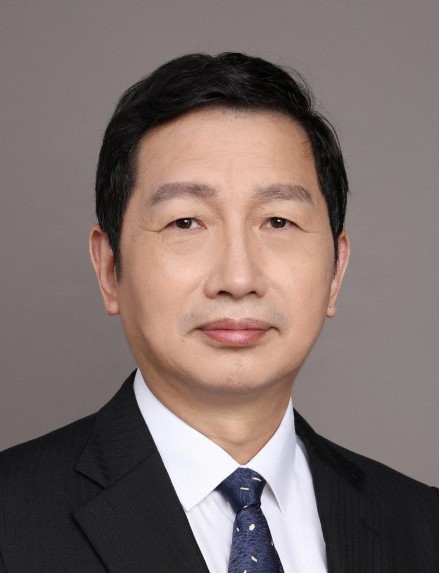
Shi Yi, male, was born in September 1962 in Yixing, Jiangsu Province. His native place is Dafeng, Jiangsu Province. Currently, he is a professor, doctoral supervisor, and the dean of the Microelectronics Institute at the School of Electronic Science and Engineering of Nanjing University. In 2002, he received the National Outstanding Young Scientist Fund. In 2006, he was selected as a national leading talent. On November 2025, he was elected as a member of the Chinese Academy of Sciences.
Professor Shi Yi obtained a bachelor's degree in Applied Physics from National University of Defense Technology in 1983. In 1986 and 1989, he received master's and doctoral degrees in Physics from Nanjing University respectively. He joined the university as an instructor in 1989 and was promoted to professor in 1995. He has held positions such as the Director of the Physics Department at Nanjing University, the Executive Vice President of the Advanced Technology Research Institute, the President of the School of Electronic Science and Engineering, and the President of the School of Microelectronics. He has also conducted visiting research at Tohoku University in Japan, University of Tokyo, University of California, Berkeley in the United States, and Massachusetts Institute of Technology. Currently, he serves as a member of the Science and Technology Committee of the Ministry of Education, a member of the Electronic Science and Technology Disciplinary Committee of the State Council's Academic Degrees Committee, and the President of the Jiangsu Electronics Society. He holds various academic positions.
Professor Shi Yi has been engaged in fundamental research and talent cultivation in the field of microelectronic science and technology for a long time. Focusing on the demands of national development, he has undertaken a series of major scientific projects and made pioneering and systematic contributions in the field of semiconductor nanotechnology, particularly in the regulation of semiconductor surface interface properties, materials and devices. He has won two National Natural Science Awards (ranked 1st and 3rd respectively), the National Teaching Achievement Award (ranked 1st), the First Prize of Jiangsu Provincial Science and Technology Progress Award (ranked 1st), and other provincial and ministerial-level science and technology progress awards 5 times. He has published over 700 SCI papers (including 3 original articles in Nature, 30+ in Nature/Science subsidiary journals, and 50+ papers in IEEE series journals and top conferences in the field of microelectronics such as IEDM, VLSI, and ISSCC), with over 30,000 SCI citations. He has also obtained more than 80 invention patents and edited 2 English monographs.
CHEN Yanfeng
Be elected as an academician of the Technical Sciences Division of the Chinese Academy of Sciences
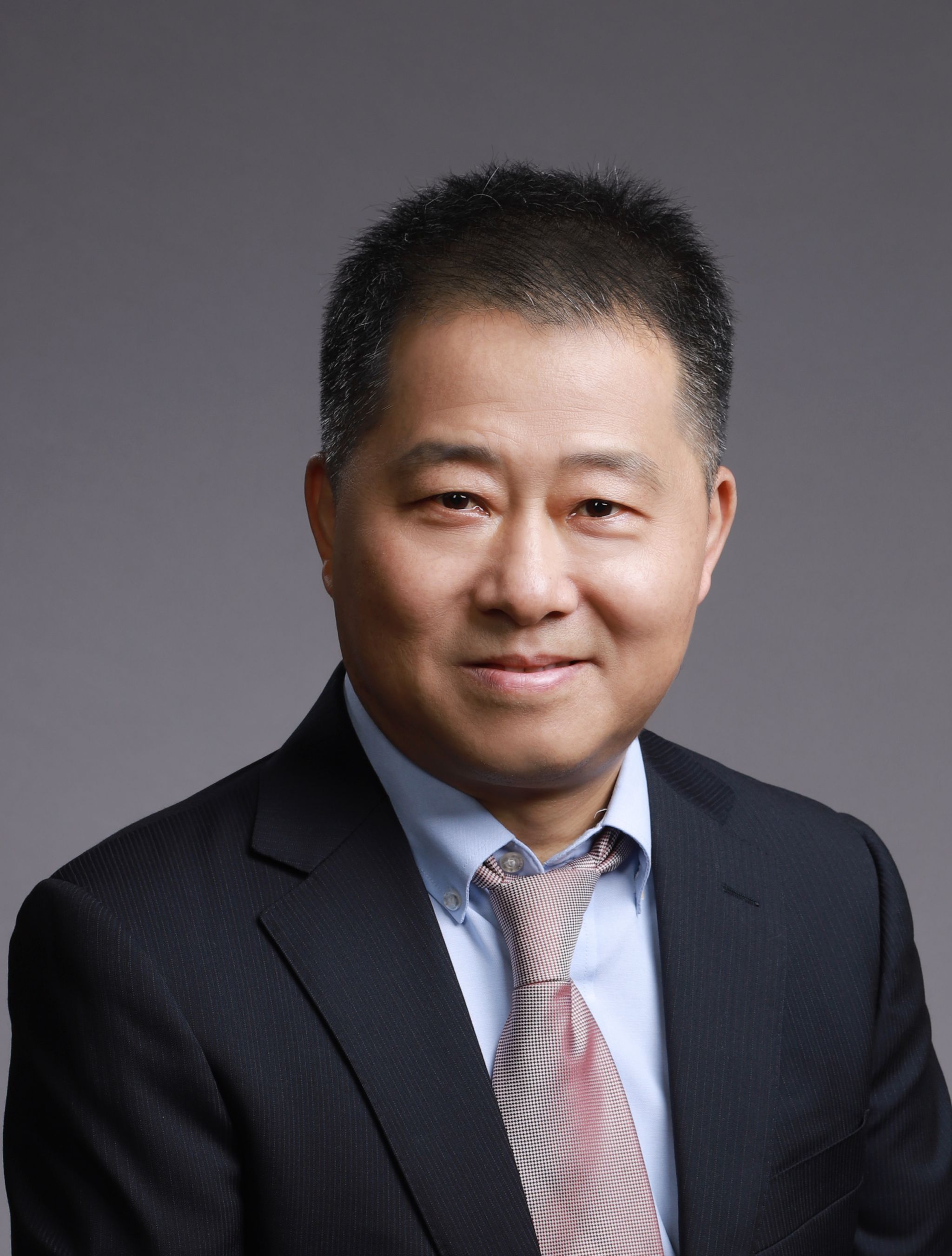
Chen Yanfeng, male, was born in Xuanwei, Yunnan Province on June 1963. His native place is Kaijiang, Sichuan Province. He is a professor and doctoral supervisor at the National Key Laboratory of Solid Microstructure Physics and the School of Modern Engineering and Applied Sciences of Nanjing University. In 2002, he received the National Outstanding Young Scientist Fund. In 2005, he was selected as a national leading talent. On November 2025, he was elected as a member of the Chinese Academy of Sciences.
Professor Chen Yanfeng obtained his bachelor's, master's and doctoral degrees in the Casting Department of the School of Materials Science and Engineering at Northwestern Polytechnical University from 1980 onwards. In 1990, he conducted postdoctoral research at the Physics Department of Nanjing University's Postdoctoral Research Station. He joined the university as an instructor in 1993 and was promoted to professor in 1997. He has held various positions such as the Director of the School of Materials Science and Engineering at Nanjing University, the Executive Vice President of the Modern Engineering and Applied Science College, and the Director of the National/China Key Laboratory of Solid Microstructure Physics at Nanjing University. During this period, he also conducted visiting research at the Department of Physics at the Hong Kong University of Science and Technology and the Department of Materials Science and Engineering at the Massachusetts Institute of Technology in the United States. He has served as the Vice Chairman of the Ultromaterials Branch of the Chinese Materials Research Society and a member of the Editorial Board of Physical Review Letters of the American Physical Society.
Professor Chen Yanfeng has been engaged in the research of materials physics and acoustic metamaterials for a long time. He has made systematic and original contributions in the fields of physical foundation, technological innovation, and major engineering applications. He has developed the band theory of acoustic metamaterials, created acoustic topological insulators and established the band theory of acoustic topological insulators; he has also developed low-frequency broadband, flat and lightweight sound-absorbing and noise-reducing metamaterials, solving the problems of heavy materials and narrow frequency bands faced in low-frequency noise control, and has been applied in noise reduction projects of national power grids and coalbed methane power stations, and has passed the application verification of major projects such as high-speed trains and domestic large aircraft. As of November 2025, he has published 121 SCI papers as the first or (co-)corresponding author, including Physical Review Letters (15), Nature Physics (3), Nature Materials (2), Science (1), Nature Reviews Physics (1), Nature Communications (12), National Science Review (2). He has been selected as a globally highly cited scientist by Clarivate Analytics. He has obtained 40 Chinese patents and 2 US patents. He has led the formulation of one group standard for acoustic metamaterials. He has received the National Natural Science Award (2015) and the Ye Qiusun Award of the Chinese Physical Society (2012-2013). Chen Yanfeng has previously led the Innovation Team Program of the Ministry of Education and the Innovation Research Group Project of the National Natural Science Foundation of China. As of November 2025, he has supervised 40 doctoral students, and the doctoral dissertations under his guidance have won 1 "National Hundred Outstanding Doctoral Dissertations" and 1 nomination; he has received 5 excellent doctoral dissertations from Jiangsu Province and 4 excellent master's dissertations from Jiangsu Province.
DAI Zigao
Elected as an academician of the Department of Mathematics and Physics of the Chinese Academy of Sciences
Dai Zige, born in November 1964, obtained bachelor's, master's and doctoral degrees from National University of Defense Technology, Shanghai Institute of Nuclear Research of the Chinese Academy of Sciences, and Nanjing University respectively in 1987, 1990, and 1993. From 1993 to 2020, he successively held positions as a postdoctoral fellow, lecturer, associate professor, and professor at Nanjing University. In November 2025, he was elected as a member of the Chinese Academy of Sciences. Professor Dai Zige has been engaged in the research of high-energy astrophysics for a long time, publishing over 360 SCI papers, including 6 in Nature, 4 in Science, and 11 in Physical Review Letters (as of August 2025), with over 18,000 citations (ADS search), an H-factor of 66, and has been selected for the Elsevier China Highly Cited Researchers list for nine consecutive years (2016-2024), and for three consecutive years (2022-2024) for the top 0.05% of global scholars in the field of astronomy selected by ScholarGPS.
CHEN Yanjing
Be elected as an academician of the Geology Division of the Chinese Academy of Sciences
Chen Yanjing was born in Dingtao County, Shandong Province in 1962. From 1980 to 1990, he studied for a bachelor's, master's, and doctoral degree in the Department of Earth Sciences at Nanjing University, and was awarded the Fourth New Star Science Award of Nanjing University. Since 1995, he has been teaching at the Department of Geology of Peking University (now part of the Earth and Space Sciences College), and is currently a Distinguished Professor at Peking University. He has received one National Natural Science Award (completed independently), two First Prizes of Natural Science from the Ministry of Education (both ranked first), and six other provincial and ministerial-level awards (ranked 2nd, 3rd, 5th, 6th, 7th, and 9th). Chen Yanjing mainly conducts research in mineral depositology. In 1987, he discovered a sudden environmental change event 2.3 billion years ago, which solved the mysteries of the major mineralization explosion in the Paleoproterozoic era and the formation of an oxygen-rich atmosphere, providing a key basis for adding the 2.3 billion-year-old age boundary to the Geological Time Scale.
LIAN Yubo
Be elected as an academician of the Mechanical and Transportation Engineering Division of the Chinese Academy of Engineering
Lian Yubao was born in 1964. He is a professor-level senior engineer. In September 2000, he obtained a master's degree in advanced business administration from Nanjing University. Lian Yubao joined BYD Co., Ltd. in February 2004 and is currently the Chief Scientist of BYD Group, the Automotive General Engineer, and the President of the Automotive Engineering Research Institute. Lian Yubao has been engaged in the design and development of new energy vehicle entire vehicles and key systems for a long time. He has led the research and development of new energy vehicle power systems and entire vehicle platforms with complete independent intellectual property rights. He was awarded the first National Excellent Engineer title by the Central Committee of the Communist Party of China and the State Council, as well as the Ho Li Ho Li Science and Technological Innovation Award, the National Innovation and Excellence Award, and the National Model Worker. He also enjoys the State Council's Special Allowance for Senior Officials.
ZHOU Jianhua
Elected as an academician of the Information and Electronics Engineering Division of the Chinese Academy of Engineering
Zhou Jianhua was born in December 1962. He obtained a doctoral degree in astronomy from Nanjing University in 1992. Over the past 40 years, he has been engaged in theoretical and engineering research on the spatiotemporal reference system of satellite navigation systems. He is a leading academic figure in this field in China and has made systematic and creative significant contributions to the construction of China's first, second and third generations of Beidou systems. He has won one Special Prize, one First Prize and one Second Prize for National Science and Technology Progress. He has ranked first in 6 provincial and ministerial-level Science and Technology Progress First Prizes. He has published 2 monographs and has been granted over 30 patents. He has been honored as a person with outstanding contributions to major projects, a national "March 8" Red Flag Model, and has received the Qian Xuesen Outstanding Contribution Award, the Guanghua Engineering and Technology Award, and the "Qi Si" Award, among others.
ZHANG Qiang
Elected as an academician of the Environmental and Textile Engineering Division of the Chinese Academy of Engineering
Zhang Qiang, a second-level researcher, was formerly the first-level inspector and chief engineer of the Gansu Meteorological Bureau, a member of the 10th Gansu Provincial Committee of the Chinese People's Political Consultative Conference, and graduated with a master's degree from the Department of Atmospheric Sciences at Nanjing University. Currently, he serves as the director of the Key Laboratory of Drought, Climate Change and Disaster Mitigation of the China Meteorological Administration, a researcher at the Lanzhou Drought Meteorological Research Institute of the China Meteorological Administration, the president of the Gansu Meteorological Society, and the director of the Drought Meteorology Professional Committee of the Chinese Meteorological Society. He also serves as the editor-in-chief of "Drought Meteorology", the associate editor of "Highland Meteorology", "Drought Zone Research", and "Desert and Oasis Meteorology", and is a member of the editorial board of academic journals such as "Acta Meteorologica Sinica". He has been engaged in research on drought meteorology, land-atmosphere interaction, and regional climate change for a long time, and has completed 13 national-level projects or programs including the "973 Program", the National Science and Technology Support Program, the National Science and Technology Key Project, and the National Natural Science Foundation Key Project.


