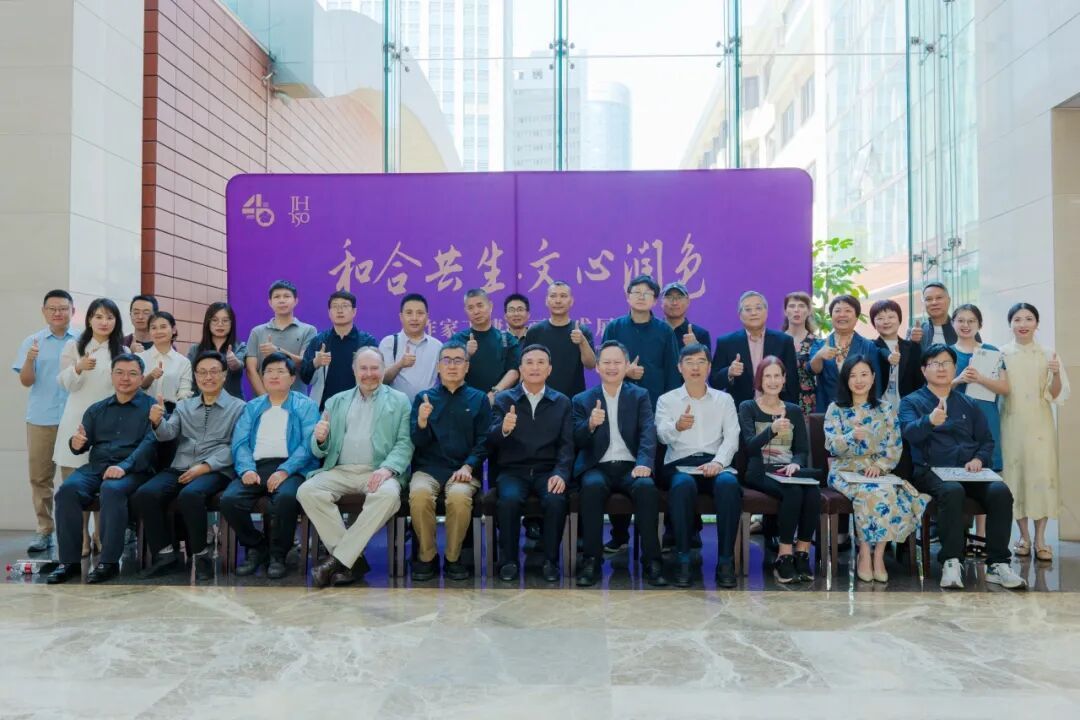
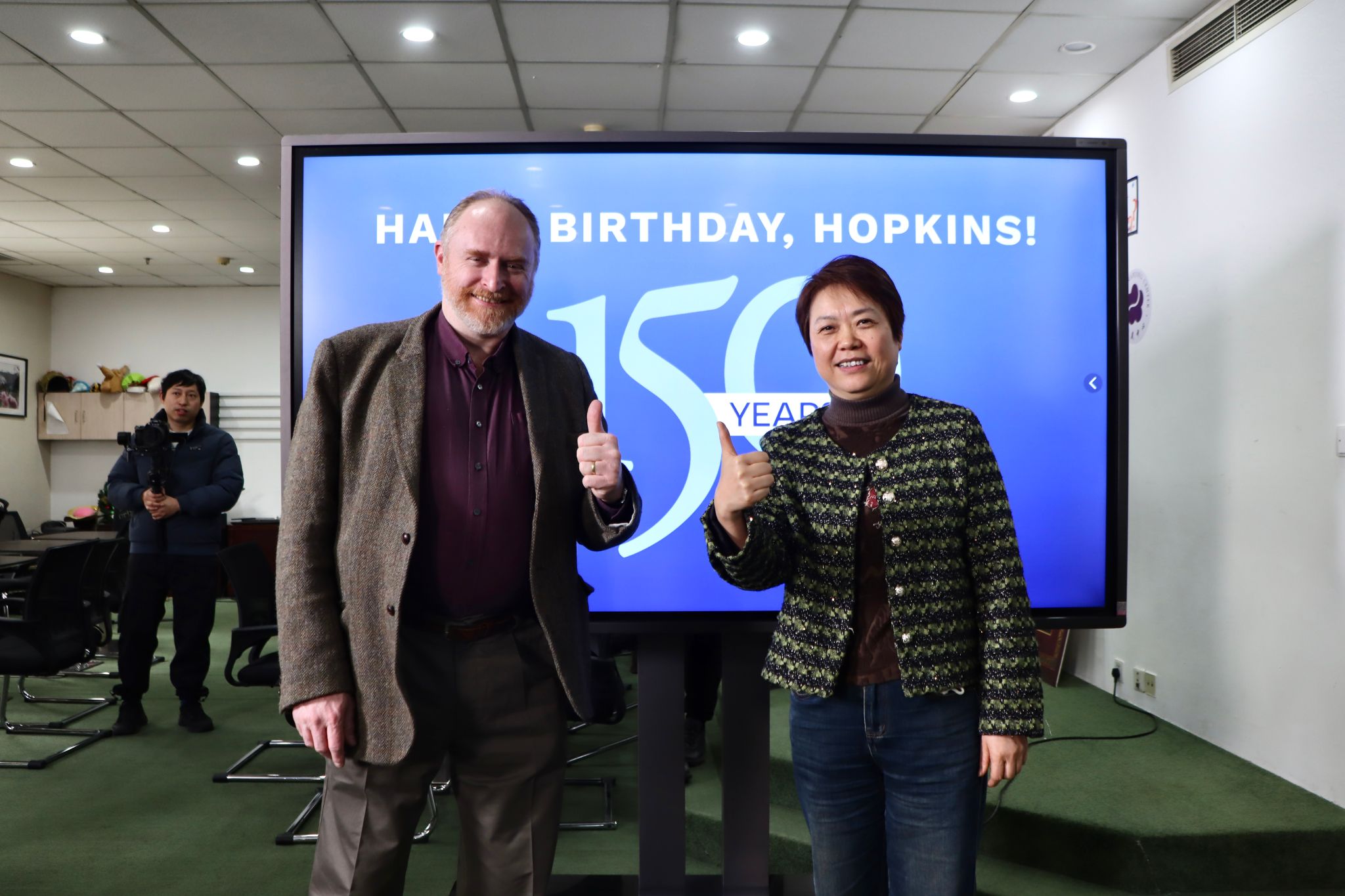
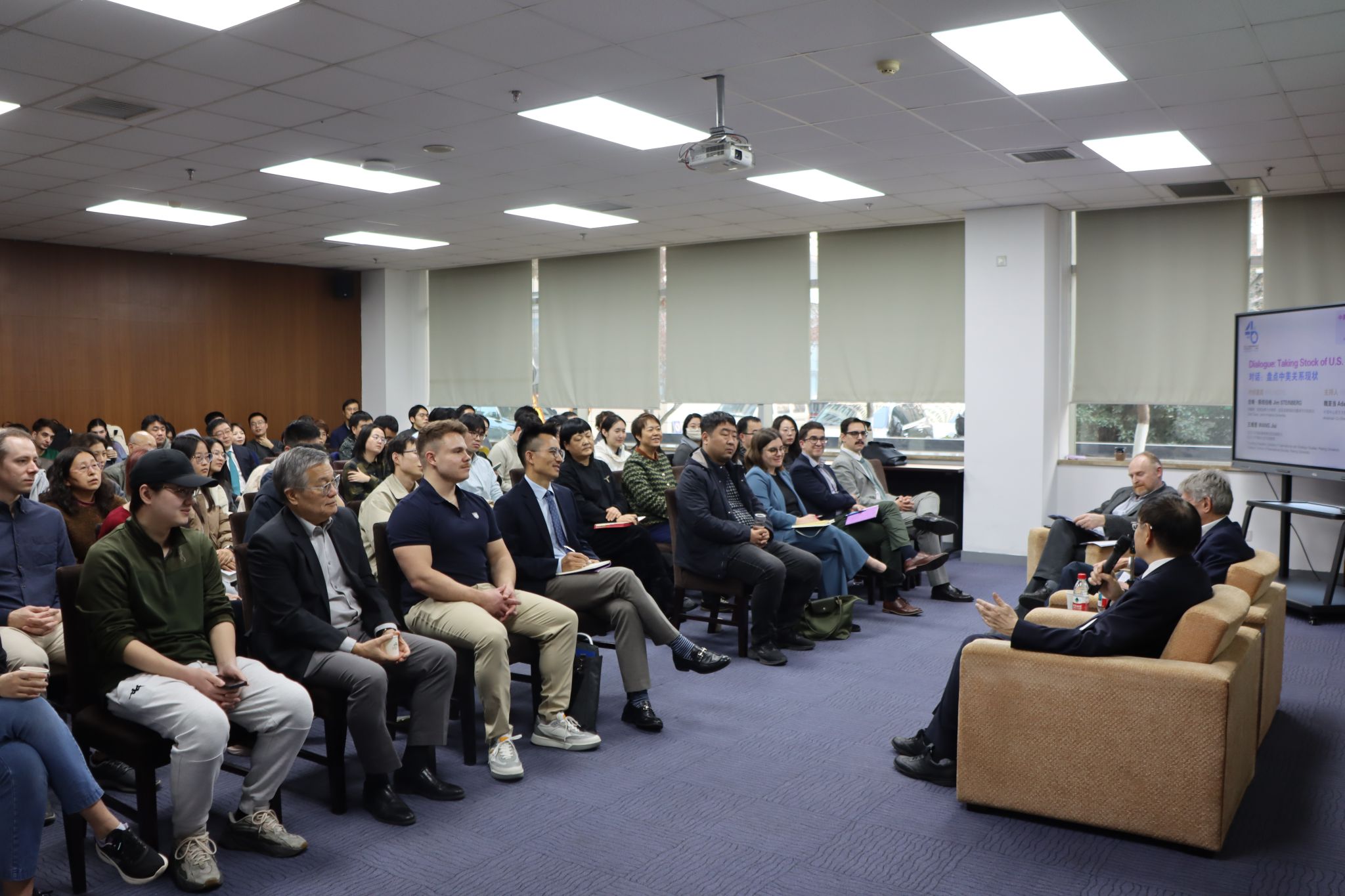
From May 13 to 18, 2026, Professor Svend Erik Larsen, Professor Emeritus at Aarhus University, Member and past Vice-President of Academia Europaea, and past Honorary Professor at University College London, visited the Institute of Global Humanities, School of Frontier Sciences at Nanjing University, for a series of academic exchange activities. During his five-day visit to the Suzhou Campus, Professor Larsen delivered two lectures and led one roundtable discussion, attracting broad participation from faculty members and students both on site and online.
Nansu Forum: "Community and Literature I"
On the afternoon of May 13, the 46th session of the Nansu Forum was held in Room E415, Nanyong Building, Nanjing University Suzhou Campus. Professor Larsen delivered a lecture entitled “Community and Literature I,” chaired by Professor He Chengzhou, Dean of the Institute of Global Humanities. The lecture drew many participants from the Suzhou Campus as well as online audiences from Nanjing and other universities.
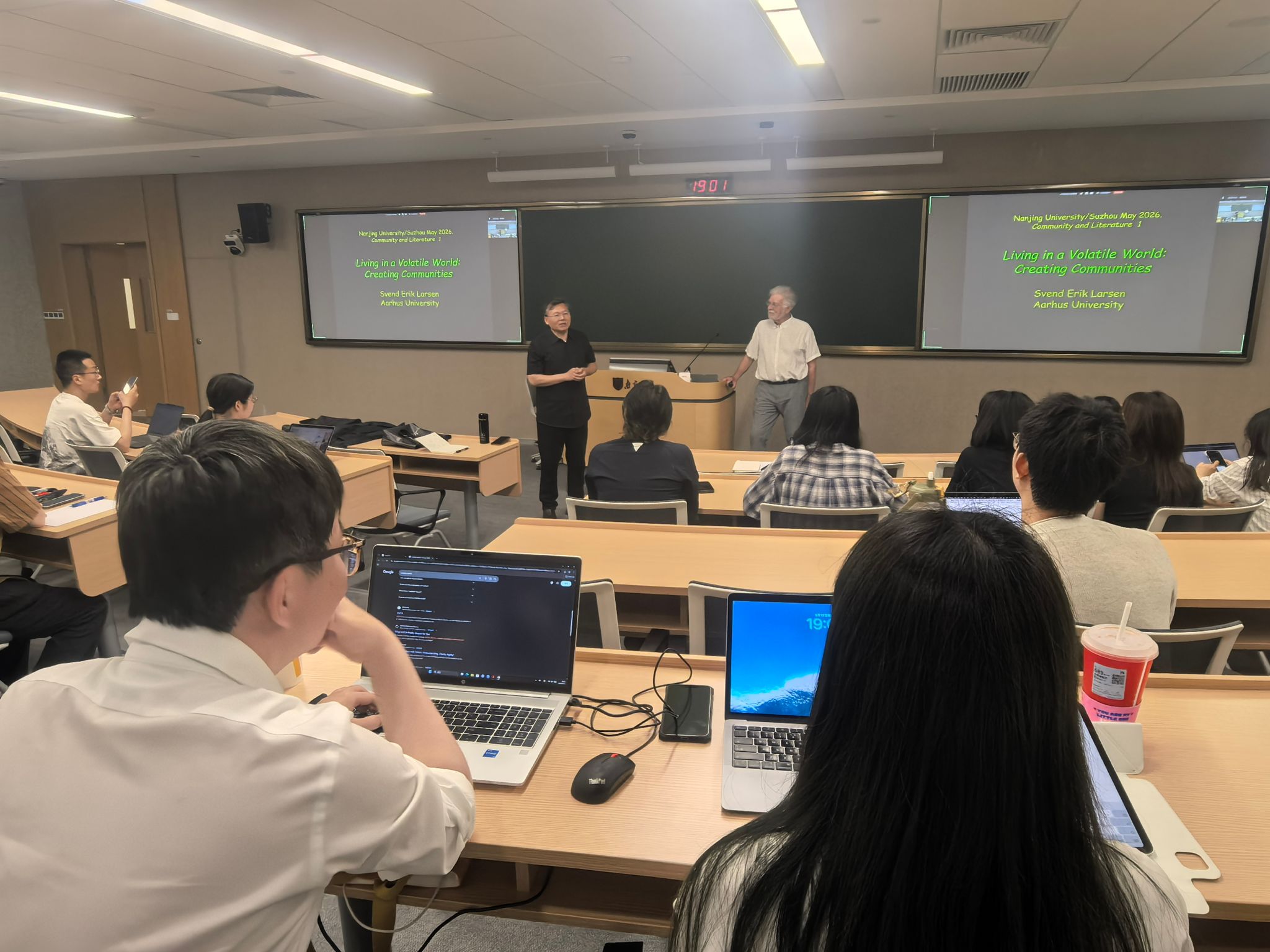
Professor Larsen began with the question: “What is the difference between living in a modern society and living in a premodern society?” He used this question to explore how historical change is reflected in changing forms of community.
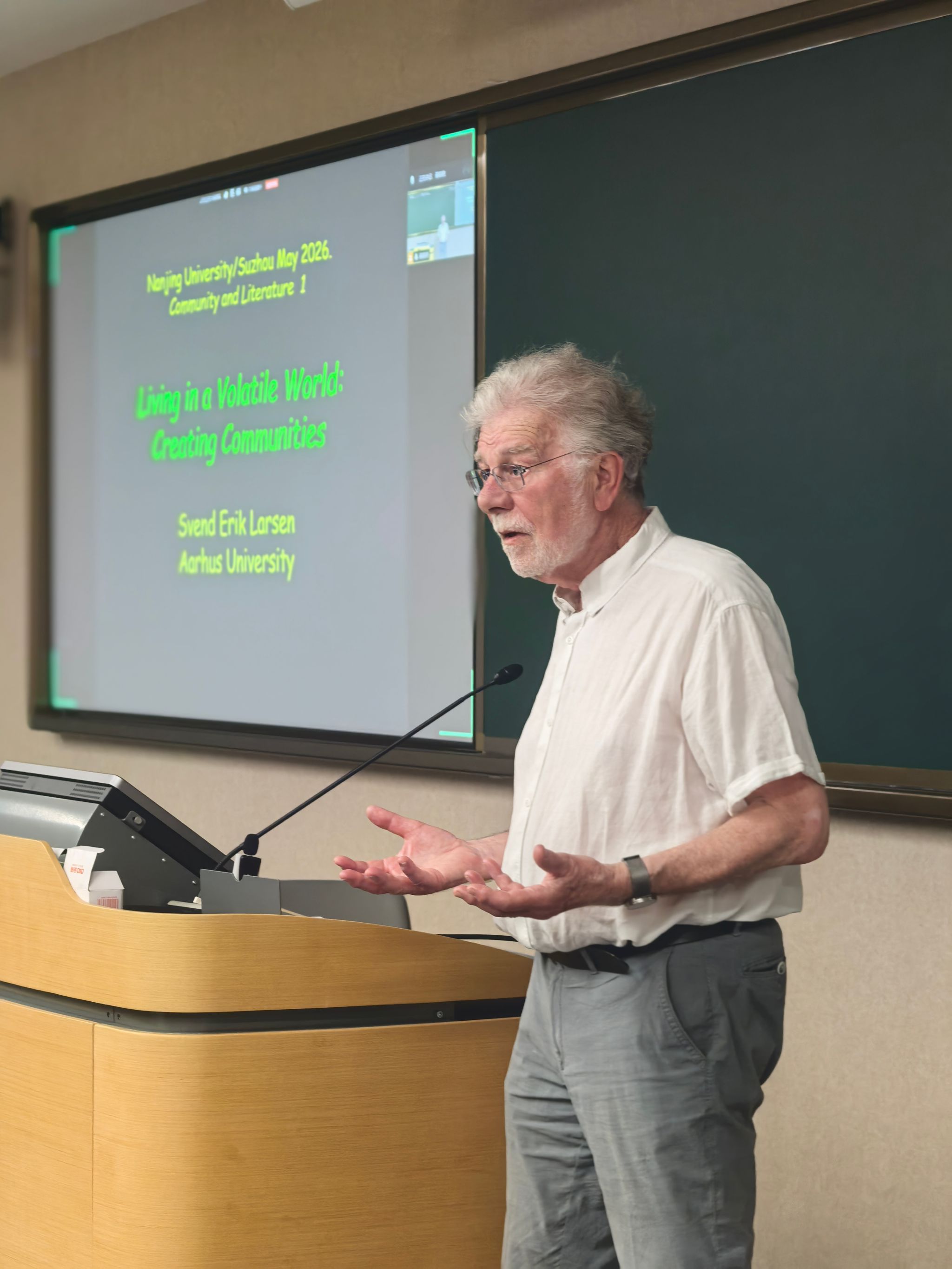
He argued that since the seventeenth and eighteenth centuries, technological and economic transformations, urbanisation, and global migration have profoundly altered human perceptions of time, space, and identity. Traditional communities have gradually disintegrated, while modern states and civil societies have emerged. Unlike community-based societies centred on human relations, modern states are shaped more centrally by law and technology. In this context, literature becomes increasingly important because it enables the imagination of possible forms of community.
Professor Larsen then outlined three approaches to the study of community in sociology and literature: historical studies, typological studies, and studies of community members. Historical studies may focus on changes in social solidarity, belonging, and concepts; typological studies examine different forms of community through features such as space, environment, and media of communication; and studies of community members investigate how agency is shaped by both formal and informal norms within communities, with particular attention to power relations.
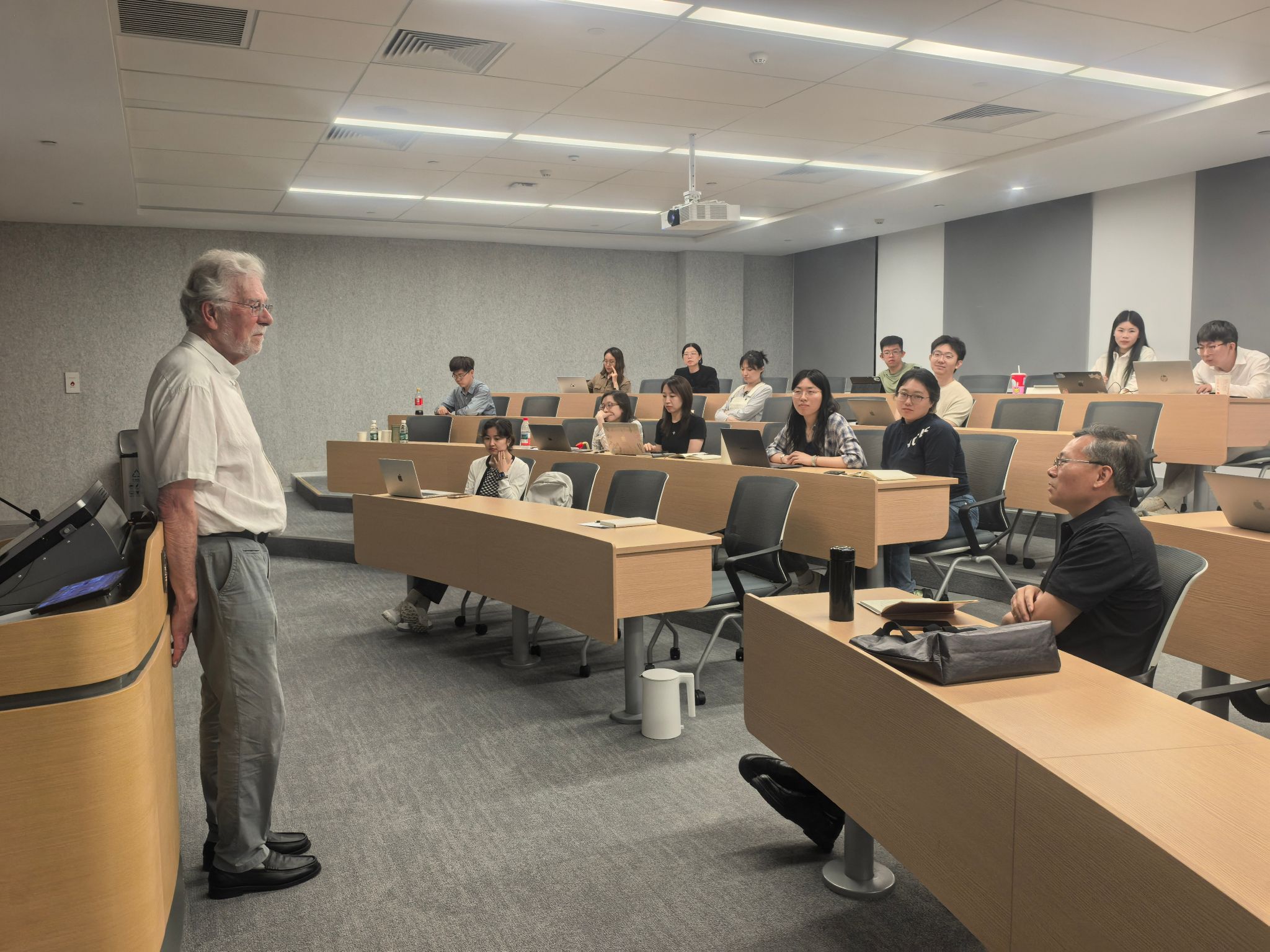
During the discussion, Professor Larsen responded to questions concerning how members of a community negotiate difference and whether modernist artistic movements in post-war Europe could be understood as forms of community. In his concluding remarks, Professor He reflected on Professor Larsen’s research methodology, noting that an original theoretical framework provides effective conceptual tools for textual analysis and is crucial for academic writing.
The lecture offered students and faculty new perspectives and practical methodologies for literary research, while also bringing fresh insights into the study of community from a global humanities perspective.
Roundtable on International Publication
To support faculty members and students in publishing in leading international journals and to enhance the Institute’s research capacity, the Institute of Global Humanities invited Professor Larsen to lead a roundtable on international journal publication on May 15 in Room 417, Nanyong Building. The session was chaired by Professor Du Lanlan, Associate Dean of the Institute, and attended by faculty members and students.
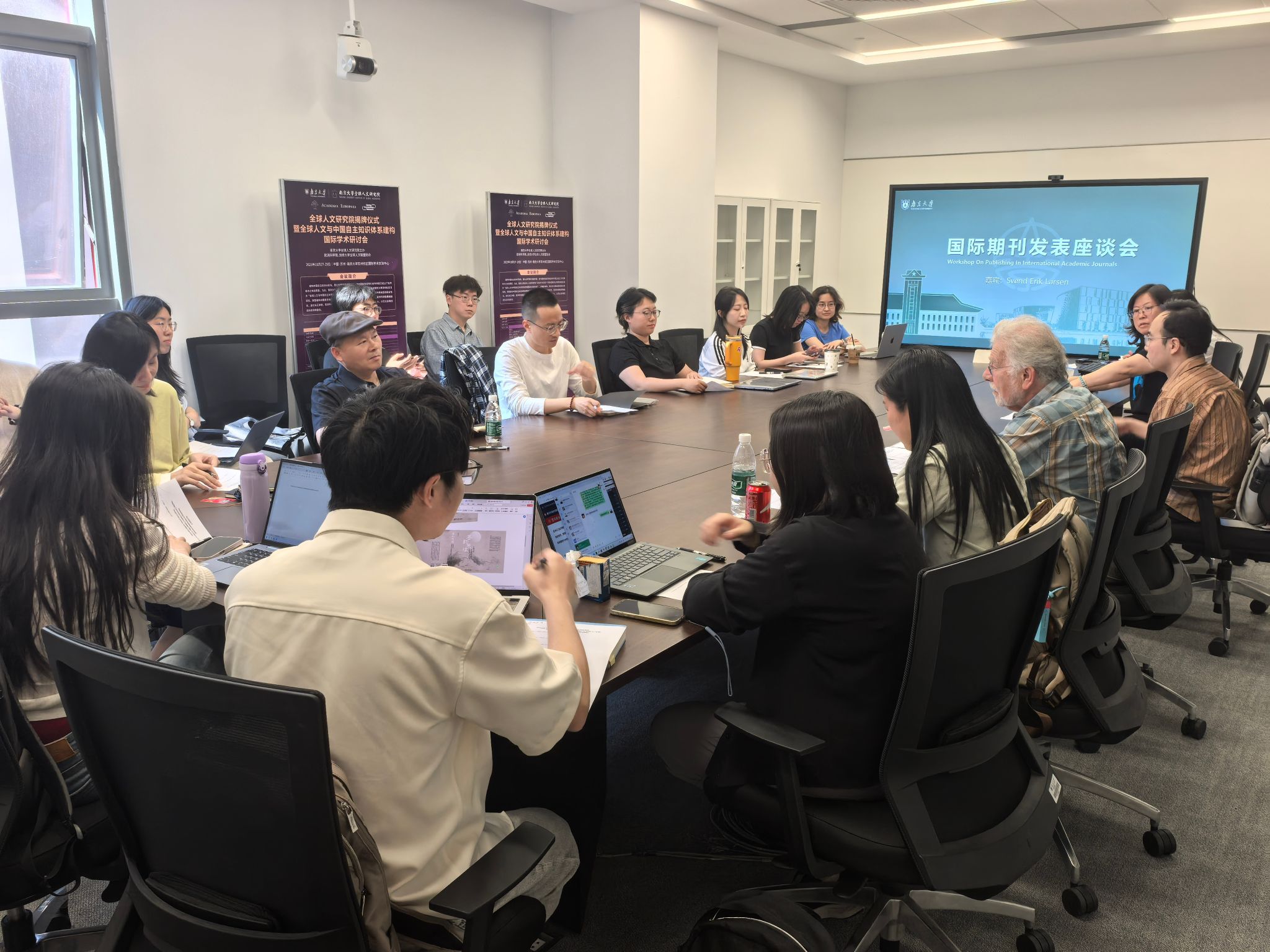
Professor Larsen discussed key stages in the publication process through seven steps, covering the formation of research ideas, the expectations of journal articles, and issues to consider during writing, submission, and revision. He reminded participants of the importance of carefully reading author guidelines and emphasised the value of discussion and feedback during the revision process.
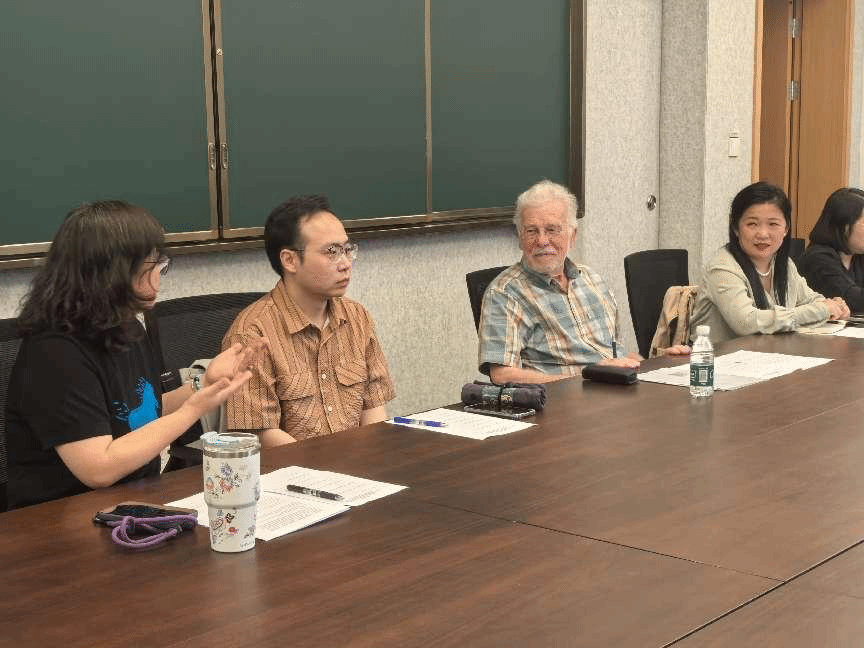
Professor Larsen also introduced his current research project on how generative artificial intelligence may assist knowledge production. He discussed how to balance the quality, efficiency, and originality of academic writing in order to better understand and engage with the emerging textual culture shaped by generative AI. His presentation helped participants develop a clearer understanding of how AI tools may be used responsibly and effectively in academic writing and international publication.
The roundtable addressed both the practical challenges of journal publication and current debates in academic knowledge production, offering valuable guidance for the Institute’s faculty and students. The Institute will continue to create platforms for scholarly exchange and support the professional development of its academic community.
Frontier Science Forum: "Community and Literature II"
On May 18, the School of Frontier Sciences and the Institute of Global Humanities hosted the 21st session of the Frontier Science Forum. Professor Larsen delivered a lecture entitled “Community and Literature II,” focusing on how literature reveals the challenges individuals face when their identities are shaped by different types of communities. The lecture attracted a wide audience of faculty members and students on site and online.
Professor Larsen first outlined a theoretical framework of community, distinguishing among three types: place-based communities, communities of circumstance, and communities formed through media of communication. He argued that literary representations of community often revolve around three key issues: internal power relations, the role of language and media in shaping membership, and the acquisition or loss of agency.
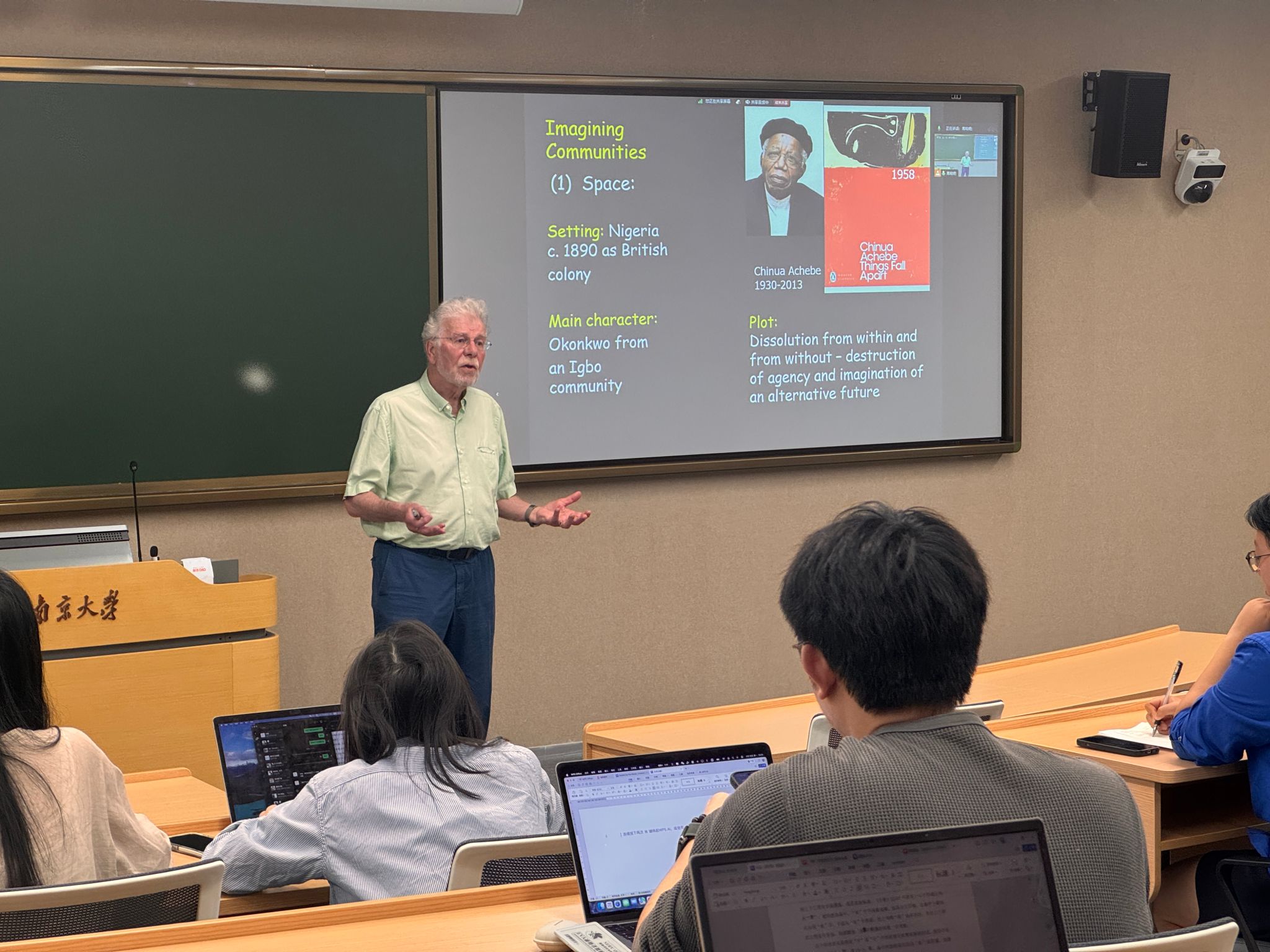
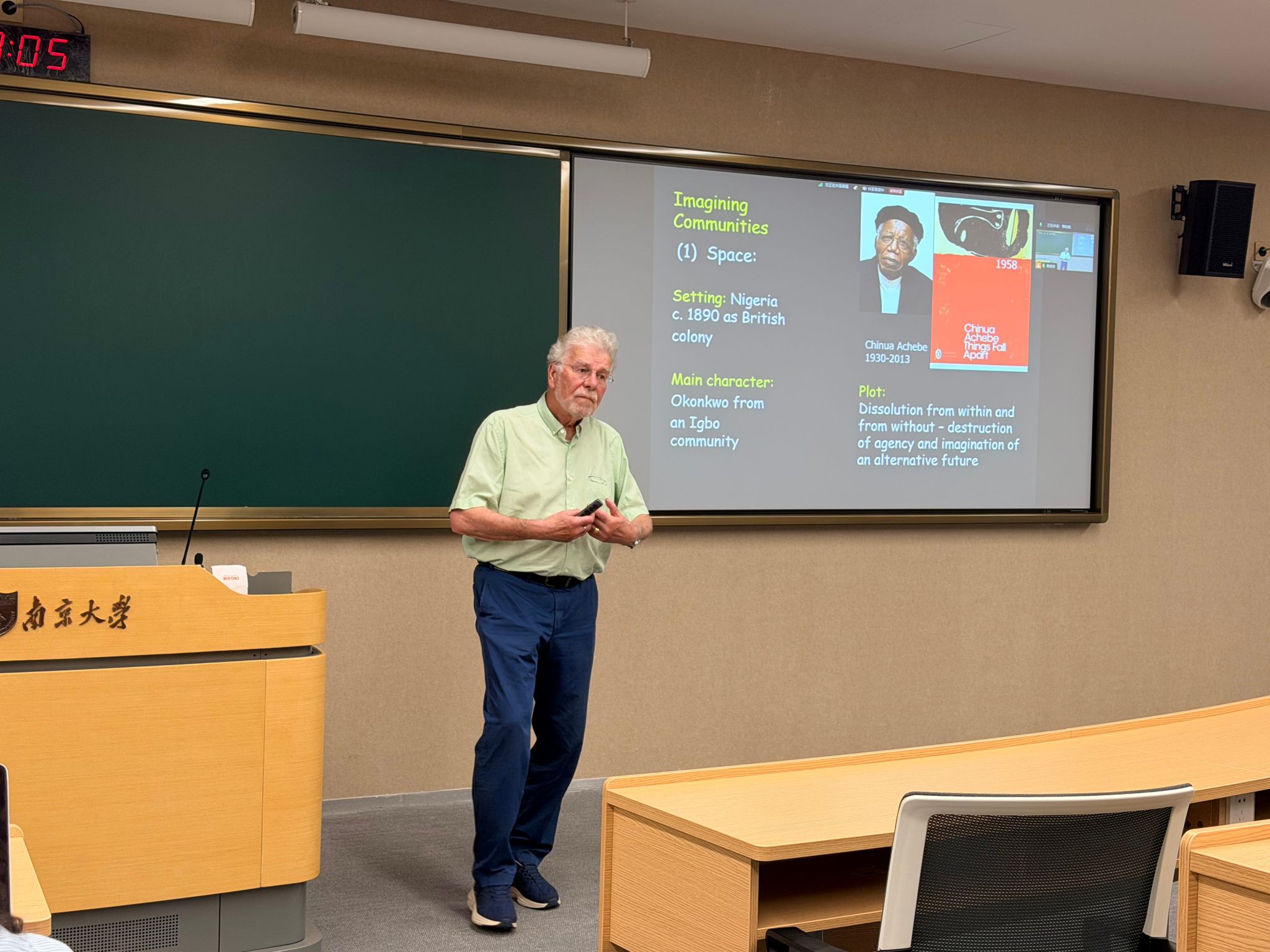
Using Chinua Achebe's Things Fall Apart as his first example, Professor Larsen analysed the dual disintegration of place-based community under colonial oppression: the external invasion of Igbo villages by British colonisers, and the internal disruption of traditional order caused by Okonkwo's individual heroic actions. He also discussed Achebe's strategy of transforming the coloniser's language and "sending it back" to the coloniser, highlighting the writer’s effort to assert cultural agency under conditions of power imbalance.
His second example was Mary McCarthy's The Group, which explores the fragile nature of a community of circumstance through the friendship among eight female graduates. Professor Larsen pointed out that such communities lack shared traditions and stable value systems; their members must constantly create rules to maintain relationships, making the community inherently unstable. The penetration of individualism further accelerates this instability.
The third case focused on the terrorist attack at the Bataclan theatre in Paris in November 2015, illustrating the complex layers of media-based community. The attack itself was organised through social media and dark-web networks, while survivors and families of victims rebuilt support networks through digital communication. Professor Larsen gave particular attention to a dialogue co-authored by the father of a victim and the father of one of the attackers. Their face-to-face conversation across hatred demonstrated that direct interpersonal communication remains a crucial path toward rebuilding communal recognition in the digital age. This case showed that, in an increasingly networked world, the question of agency has become central to literature's engagement with community.
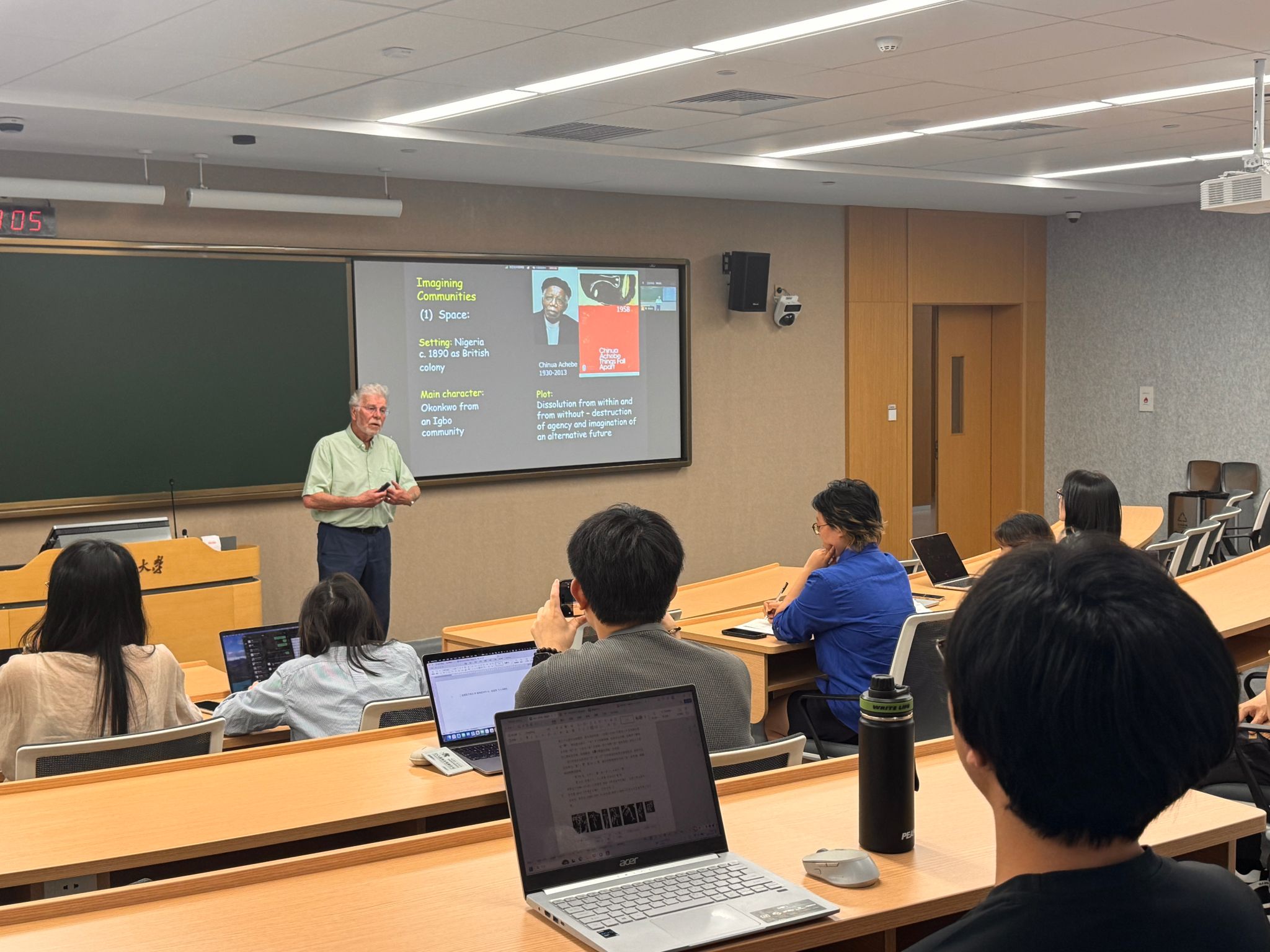
The lecture was followed by a lively discussion. In response to a question on language choice among postcolonial writers, Professor Larsen outlined the debate between using the coloniser’s language to reach a global audience and returning to the mother tongue to build national literature. He further reflected on the nature of translation, arguing that translation should be understood as a form of “creative rewriting” rather than a simple transfer between languages. Responding to a question on agency and communal constraint, he emphasised that genuine agency does not mean standing outside community, but actively constructing one's position within it and creating meaning together with others.
With its broad literary vision and rich case studies, the lecture revealed the power of literature in constructing and reflecting on community, offering valuable intellectual inspiration to students and faculty and further enhancing Nanjing University's engagement in global humanities dialogue.
Professor Svend Erik Larsen's visit was supported by the "Nanjing University–Cambridge University Global Humanities Collaborative Innovation Platform Enhancement Programme", a special project the Nanjing University International Collaboration Initiative (NICI-GESP). As an important activity of the project in 2026, the visit contributed to the Institute's efforts to advance global humanities research, promote the diversification of literary studies, and strengthen doctoral training. It also deepened academic exchange between the Institute of Global Humanities and leading international scholarly communities, laying a solid foundation for future inter-institutional and interdisciplinary collaboration.
Looking ahead, the Institute of Global Humanities will continue to draw on the NICI-GESP project and the Nanjing University–Cambridge University Global Humanities Collaborative Innovation Platform to invite leading international scholars for academic exchange, build high-level scholarly platforms for faculty and students, and support the international development of humanities research at Nanjing University.